Table of Contents
Search Engine Optimization (SEO) is not a layer you add to a finished website; it is the foundation upon which the site is built. The “best” website builder for SEO is not simply the one with the most checkboxes in a feature list. It is the platform that offers the perfect balance of technical control, performance architecture, and content management capabilities.
In this guide, we will dismantle the current market landscape, analyze the technical requirements of modern SEO, and explain why a holistic platform approach—specifically leveraging the open-source power of WordPress fortified by a managed ecosystem—often yields the superior result for serious web creators.
Key Takeaways
- Control is King: The best SEO platforms offer granular control over server-side configurations, code structure, and metadata, rather than locking these elements behind a “walled garden.”
- Performance is Foundational: Core Web Vitals are now critical ranking signals. Your builder must run on high-performance infrastructure (like Google Cloud Platform) and utilize advanced caching and CDNs (like Cloudflare) to compete.
- Content and Code Separation: Platforms that separate your design logic from your content data (like WordPress) allow for cleaner code and easier updates, which search crawlers prefer.
- The “Platform” Advantage: Standalone builders often fragment your workflow. An integrated ecosystem—combining hosting, design, AI, and optimization tools—streamlines the technical SEO process and reduces plugin bloat.
- Accessibility Equals Visibility: Search engines and screen readers parse content similarly. Tools that ensure web accessibility (like the Ally plugin) directly contribute to better SEO outcomes.
- AI as a Force Multiplier: Modern SEO requires velocity. Integrated AI tools that assist in generating schema, optimizing metadata, and creating content clusters are essential for maintaining a competitive edge.
The Core Pillars of Technical SEO in 2025
To understand which builder is “best,” we must first define the problem we are solving. Google’s algorithm is a sophisticated evaluator of user experience and information quality. It rewards websites that are fast, accessible, secure, and logically structured.
1. Code Cleanliness and DOM Structure
Search engine spiders (crawlers) read code, not visual designs. Code bloat”—excessive JavaScript execution, redundant CSS styles, and deep nesting of HTML elements (DOM depth)—confuses crawlers and wastes their “crawl budget.” A superior builder produces semantic HTML5 output. It uses appropriate tags (<header>, <nav>, <main>, <article>, <footer>) to tell Google exactly what part of the page is what.
2. Core Web Vitals and Performance
Google’s Core Web Vitals metrics—Largest Contentful Paint (LCP), Interaction to Next Paint (INP), and Cumulative Layout Shift (CLS)—measure the actual user experience.
- LCP: How fast does the main content load? This is heavily influenced by your hosting infrastructure and image optimization.
- INP: How quickly does the page respond to a click? This depends on efficient JavaScript handling.
- CLS: Does the layout jump around? This is a function of how your builder handles CSS and asset loading.
3. Mobile-First Indexing
Google predominantly uses the mobile version of the content for indexing and ranking. Your website builder must not simply “shrink” a desktop site to fit a phone screen. It must generate a responsive, mobile-first experience where touch targets are sized correctly, font sizes are legible, and unnecessary assets are hidden to save bandwidth.
4. Customization of Metadata and Schema
You need absolute control over your title tags, meta descriptions, URL slugs (permalinks), and canonical tags. Beyond the basics, the ability to inject Schema Markup (JSON-LD) is non-negotiable for serious SEO. This structured data helps Google understand your content is a “Recipe,” a “Product,” or a “Local Business,” enabling rich snippets in search results.
The Website Builder Landscape: A Neutral Analysis
There are dozens of platforms available today. Broadly, they fall into two categories: Closed SaaS (Software as a Service) platforms and Open Source Content Management Systems (CMS).
The Closed SaaS Model (Wix, Squarespace)
Closed platforms offer an all-in-one experience. You pay a monthly fee, and the provider handles the hosting, the software updates, and the security.
Wix Wix operates as a comprehensive, template-driven platform. It uses a drag-and-drop editor that allows for absolute positioning of elements.
- SEO Functionality: Wix has integrated significant SEO capabilities directly into its dashboard. It creates sitemaps automatically and allows for the customization of meta tags and URL slugs. It includes an “SEO Wiz” checklist for beginners.
- Infrastructure: Websites are hosted on Wix’s proprietary infrastructure. Users cannot migrate their site to a different host without rebuilding it.
- Architecture: The platform relies heavily on JavaScript to render pages, which historically posed challenges for crawling, though recent updates have improved server-side rendering.
Squarespace Squarespace is known for its visual aesthetics and structured design approach. It creates websites based on responsive templates that restrict how much a user can break the layout.
- SEO Functionality: The platform creates clean HTML structures by default. It includes built-in mobile optimization and SSL certificates. Users can edit page titles and descriptions.
- Infrastructure: Like Wix, it is a closed environment. You lease the software and the server space together.
- Architecture: It does not utilize an app market for SEO plugins, meaning you rely entirely on the native features provided by the Squarespace engineering team.
The Hybrid/Designer Model (Webflow)
Webflow Webflow positions itself for designers who want to export clean code. It is a visual interface for writing HTML and CSS.
- SEO Functionality: Webflow offers excellent control over the semantic structure of the page. You can define exact heading hierarchies and classes.
- Infrastructure: It uses AWS hosting and a global CDN.
- Architecture: While powerful, it requires a steep learning curve. Content management is handled through “Collections,” which are robust but distinct from the familiar page-based editing of other tools.
The Open Source Model (WordPress)
WordPress WordPress is open-source software that powers over 43% of the web. It is not a “builder” in the SaaS sense but a Content Management System (CMS) that you install on a server.
- SEO Functionality: Out of the box, WordPress is well-structured for search engines. Its power lies in its extensibility. You can install dedicated SEO plugins (like Yoast or Rank Math) to handle technical optimizations that closed platforms often hide.
- Infrastructure: You choose your own hosting. This is a critical distinction. You can select high-performance enterprise hosting or cheap shared hosting; the choice impacts your SEO performance significantly.
- Architecture: You own your data. You can modify every line of code. However, the core software requires a theme and plugins to function as a visual builder.
Why The “Platform” Approach Wins
When comparing these options, a pattern emerges. Closed platforms offer simplicity but cap your potential. If their native SEO tools don’t support a specific schema type or URL structure, you are stuck. Open-source WordPress offers unlimited potential but can be fragmented. You might stitch together a host from Company A, a theme from Company B, and a builder from Company C, leading to code conflicts and performance bloat.
The superior solution for SEO in 2025 is the Integrated Platform Approach. This strategy takes the open-source freedom of WordPress and fortifies it with a unified ecosystem of performance, design, and optimization tools.
This is where Elementor has evolved. It is no longer just a page builder plugin; it is a comprehensive Website Builder Platform that sits on top of WordPress, solving the fragmentation issue while retaining the open-source SEO advantage.
By unifying the creation workflow—Host, Build, Optimize, and Grow—you eliminate the technical friction that kills SEO performance.
Strategic Advantage 1: The Optimized Foundation (Hosting)
SEO begins at the server level. Google has explicitly stated that page speed is a ranking factor. If your Time to First Byte (TTFB) is slow because your server is overcrowded, no amount of keyword optimization will save you.
In a traditional WordPress setup, you might choose a budget host. In the Elementor ecosystem, Elementor Hosting provides an infrastructure explicitly engineered for the builder.
The Architecture of Speed
Elementor Hosting is built on the Google Cloud Platform (C2 instances). These are premium tiers of cloud computing, not shared servers.
- Cloudflare Enterprise CDN: Every asset—image, CSS file, script—is cached and delivered from a server closest to your visitor. This creates near-instant load times globally, directly improving your LCP scores.
- Server-Side Caching: The hosting environment is pre-configured with advanced caching rules that work in harmony with the Elementor builder. You don’t need to configure complex caching plugins that might break your site’s layout.
This “managed” approach means the technical debt of server optimization is removed from your plate, allowing you to focus on content.
Case Study: The Core Web Vitals Correlation
When you decouple your hosting from your builder (as with generic WordPress hosting), you often face the “plugin blame game” when scores drop. With an integrated platform, the server and the software are tuned together. This often results in “green” Core Web Vitals scores out of the box, giving you a tangible ranking signal advantage over competitors on slower, shared infrastructure.
Strategic Advantage 2: The Professional’s Canvas (Hello Theme)
A common SEO mistake is choosing a “heavy” WordPress theme that comes pre-loaded with sliders, portfolios, and hundreds of fonts you will never use. This code loads on every page, slowing down your site and confusing crawlers.
The Hello Theme by Elementor is the antidote to this.
The Lightweight Philosophy
Hello is a “starter theme.” It contains almost zero styling. It is effectively a blank canvas of semantic HTML.
- File Size: It is incredibly small (under 10KB usually), meaning it loads instantly.
- Request Count: It makes minimal HTTP requests.
- Purpose: It relies on the Elementor builder to handle the design.
For SEO, this is perfect. You are not fighting against a theme’s bloat. You are building exactly the DOM structure you need, and nothing more. This creates a lean, fast-rendering document that Google loves to crawl.
For beginners who need a head start but want to maintain this performance, Hello Biz offers a similar lightweight foundation but with guided setup wizards, ensuring you don’t start with a blank screen but still retain the technical SEO benefits of the Hello framework.
Strategic Advantage 3: Technical SEO Control
Most website builders hide the code. Elementor empowers you to control it without writing it. This distinction is vital for Technical SEO.
Semantic HTML Tags
In the Elementor editor, every time you drop in a widget—a Heading, a Section, a Container—you have a specific control to set the “HTML Tag.”
- You can set your main headline to <h1>.
- You can set sub-headlines to <h2>, <h3>, etc.
- You can set a container to be a <header>, <footer>, <main>, or <article>.
This allows you to construct a perfect document outline visually. You aren’t stuck with <div> soup; you are building a semantic web page that assistive technologies and search engines can parse logically.
Custom Attributes and integration
Elementor integrates seamlessly with top-tier SEO plugins like Yoast SEO and Rank Math. You can edit your meta titles, descriptions, and even preview your SERP (Search Engine Results Page) listing directly within the Elementor interface. You don’t have to switch tabs or leave your design flow.
Furthermore, Elementor Pro allows for Custom Code insertion. If you need to add a specific tracking pixel or a verification meta tag to the <head> of your site, you can do it globally from the Elementor dashboard without editing the header.php file of your theme.
Strategic Advantage 4: Content Velocity with AI
In 2025, the frequency and depth of your content matter. Building “Content Clusters”—groups of interlinked articles covering a topic in depth—is a primary strategy for establishing Topical Authority.
Elementor AI is integrated directly into the builder, acting as a force multiplier for SEO content production.
Metadata Optimization
You can use Elementor AI to inspect a page’s content and generate optimized Title Tags and Meta Descriptions instantly.
- Prompt: “Write a meta description for this page that includes the keyword ‘best hiking boots’ and encourages a click.”
- Result: A perfectly length-optimized snippet ready to publish.
Content Expansion
If you have a thin product page (which Google dislikes), you can use Elementor AI to expand the description, generating “Features and Benefits” sections or “FAQ” accordions directly on the canvas. This increases the “text-to-HTML ratio” and provides more context for crawlers.
Image Generation and Alt Text
Unique images rank better than stock photos. Elementor AI can generate unique visuals for your blog posts. More importantly, it can assist in writing descriptive Alt Text for those images, ensuring your visual content is accessible and indexable.
Watch how AI integrates into the workflow here: https://www.youtube.com/watch?v=cmx5_uThbrM&pp=0gcJCcYJAYcqIYzv
Strategic Advantage 5: Visual Performance (Image Optimizer)
Images are often the heaviest elements on a webpage. If you upload a 5MB photo from your camera directly to your website, your bounce rate will skyrocket as users wait for it to load.
The Image Optimizer by Elementor plugin automates the solution.
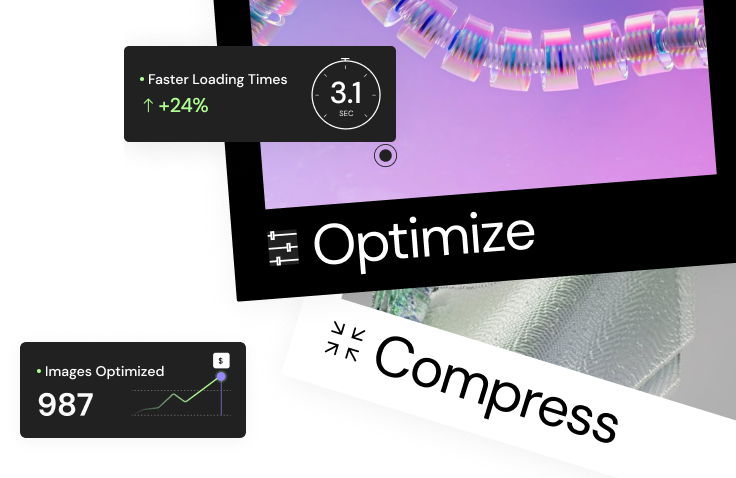
- Compression: It intelligently reduces file size without visible loss of quality.
- Conversion: It automatically converts JPEGs and PNGs into WebP or AVIF formats. These next-generation formats are significantly smaller and preferred by Google.
- Resizing: It ensures that you aren’t serving a 4000-pixel wide image to a phone that is only 400 pixels wide.
By handling this automatically, the platform ensures that your “Largest Contentful Paint” (LCP) metric remains healthy, protecting your rankings.
Strategic Advantage 6: Accessibility as an SEO Signal
There is a strong correlation between Web Accessibility (A11y) and SEO.
- Code Structure: Screen readers and search crawlers both rely on semantic HTML (headings, alt text, landmarks).
- User Metrics: Accessible sites are easier to use, leading to longer dwell times and lower bounce rates.
Ally by Elementor is a plugin designed to bridge this gap. It provides automated scans of your website to identify accessibility violations—like low contrast text or missing alt tags—that also hurt your SEO. It offers a “remediation wizard” to help you fix these issues.
By making your site accessible, you are technically optimizing it for the most important “blind user” of all: the Google Bot.
See Ally in action: https://www.youtube.com/watch?v=-2ig5D348vo
Strategic Workflow: Building a High-Ranking E-Commerce Site
E-commerce SEO is notoriously difficult due to duplicate content on product pages and complex URL structures. Here is how a professional workflow uses the Elementor platform to solve this.
Step 1: Planning the Structure (AI Site Planner)
Before you build, you need a map. Use the Elementor AI Site Planner.
- Action: Input your business type (e.g., “Organic Coffee Roaster”).
- Output: The AI generates a sitemap including “Shop,” “Subscription Guide,” “Brewing Tips” (blog), and “About.” This establishes a logical hierarchy, which is crucial for link equity flow.
Step 2: Designing the Product Templates (WooCommerce Builder)
Do not rely on the default WooCommerce product page, which is often unoptimized. Use the Elementor WooCommerce Builder.
- Custom Layouts: Create a single “Single Product” template.
- Schema Injection: Ensure your “Review” widget and “Price” widget are pulling dynamic data that Google can read as Product Schema (Rich Snippets).
- Related Products: Design a custom “You May Also Like” section using the Loop Grid. This strengthens internal linking, spreading authority from high-traffic products to new ones.
Step 3: Local SEO and Performance
If you have a physical location, use Elementor to build a dedicated “Locations” page. Embed a Google Map and use the Icon List widget to mark up your Name, Address, and Phone Number (NAP) consistent with your Google My Business profile. Ensure Elementor Hosting is delivering your assets via the CDN, so a customer in Tokyo loads your coffee shop’s images as fast as a customer in New York.
Step 4: Ongoing Content Marketing
Launch a blog using the Hello Theme. Use Elementor AI to brainstorm topic clusters around “Coffee Brewing Methods.” Interlink these articles back to your product categories. This signals to Google that you are an authority on coffee, not just a seller of it.
Advanced SEO Tactics with Elementor
For those looking to move beyond the basics, the platform enables advanced technical maneuvers.
1. Dynamic Content and Internal Linking
Elementor Pro’s Dynamic Tags feature allows you to build complex internal linking structures. You can create a “Dynamic Template” for a specific category of posts that automatically includes a sidebar with links to the “Top 5 Posts” in that specific category. This contextual relevance boosts the authority of those pages.
2. Custom Breakpoints for Mobile UX
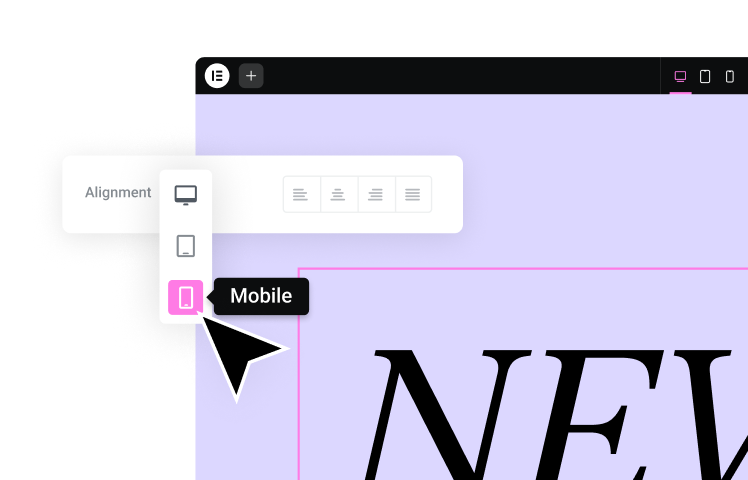
Google’s Core Web Vitals penalize “Layout Shift” (CLS). Often, this happens when a desktop layout breaks on a specific tablet size. Elementor allows you to add Custom Breakpoints. You can design a specific layout for a widescreen monitor, a laptop, a tablet, and a mobile phone. This ensures the layout is stable across every device, preserving your CLS score.
3. Loop Builder for Engagement
The Loop Builder allows you to design custom listing grids for your posts or products. You can design a card that highlights the “Read Time” or “Author.” By making these archive pages more engaging, you increase the click-through rate (CTR) to your inner pages, a positive user signal to search engines.
Watch a tutorial on advanced design capabilities: https://www.youtube.com/watch?v=QKd7d6LueH4
Conclusion: The Verdict
So, what is the best website builder for SEO in 2025?
If you prioritize simplicity over performance and are willing to accept a “ceiling” on your optimization, closed platforms like Wix or Squarespace are capable tools. They have improved significantly and can rank for local and low-competition terms.
However, if your goal is to compete for high-value keywords, scale your traffic, and own your digital infrastructure, the answer is WordPress.
But WordPress alone is not enough—it requires the right stack.
The Elementor Ecosystem represents the apex of this stack. It combines the open-source power of WordPress with the performance of managed Google Cloud hosting, the code cleanliness of the Hello Theme, and the workflow acceleration of AI. It gives you the “SaaS experience”—integrated, supported, and secure—without the SaaS limitations.
For the serious web creator, Elementor is not just a design tool; it is a competitive SEO advantage.
Frequently Asked Questions (FAQ)
1. Does using a page builder like Elementor hurt my SEO?
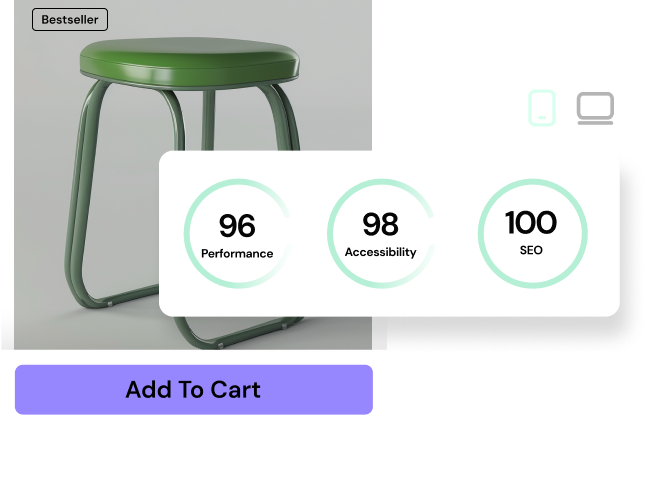
No, using a page builder does not inherently hurt SEO. In the past, some builders generated messy code (“bloat”). However, Elementor has significantly optimized its DOM output. When paired with the Hello Theme and Elementor Hosting, Elementor sites can achieve perfect 100/100 Core Web Vitals scores. The “builder penalty” is largely a myth in 2025 if you use the tool correctly.
2. Is Elementor Hosting better for SEO than cheap shared hosting?
Yes, absolutely. Cheap shared hosting often suffers from “bad neighbors”—other sites on the server using up resources, causing your site to slow down. Slow TTFB (Time to First Byte) hurts rankings. Elementor Hosting uses isolated cloud resources and an enterprise-grade CDN (Cloudflare), ensuring your site loads instantly, which is a direct ranking factor.
3. Can I edit meta titles and descriptions in Elementor?
Yes. Elementor integrates deeply with plugins like Yoast SEO and Rank Math. You can access the SEO controls for these plugins directly within the Elementor editor panel. You do not need to leave the visual interface to update your metadata or check your keyword density.
4. How does the Hello Theme help with SEO?
The Hello Theme is extremely lightweight. It loads very few scripts and styles, essentially giving you a “blank canvas.” Because it doesn’t load unnecessary code (like a heavy multi-purpose theme might), your page size remains small, your load times are fast, and search engine crawlers can parse your content efficiently.
5. Does Elementor support Schema Markup?
Yes. While Elementor generates standard HTML5 schema (like <header> and <footer>), you can inject specific JSON-LD schema using the Custom Code feature in Elementor Pro. Additionally, many Elementor widgets (like the Star Rating widget or Testimonial widget) are compatible with rich snippet data when properly configured with SEO plugins.
6. Is Elementor good for Mobile SEO?
Elementor is excellent for mobile SEO because it allows for “Mobile Editing Mode.” You can hide heavy elements (like large background videos) specifically on mobile devices to improve load speeds. You can also adjust font sizes and padding specifically for mobile, ensuring your site passes Google’s “Mobile-Friendly” test.
7. How does Elementor AI help with SEO?
Elementor AI can generate SEO-optimized content, write meta descriptions, and suggest alt text for images. It helps you maintain a high velocity of content production, which is crucial for SEO. It also helps generate custom HTML/CSS snippets that might be needed for specific technical SEO implementations without needing a developer.
8. Can I migrate my Elementor site if I leave Elementor Hosting?
Yes. Unlike Wix or Squarespace, which lock you into their platform, an Elementor site is just a WordPress site. You can export your database and files and move them to any host that supports WordPress. This data ownership is a critical safety net for long-term business strategy.
9. What is the difference between Elementor Free and Pro for SEO?
Elementor Free allows you to build a fast, responsive site. However, Elementor Pro includes the Theme Builder (allowing you to optimize headers/footers), the Loop Builder (for better internal linking structures), and the Custom Code manager (for inserting tracking pixels and schema). For serious SEO, the Pro version offers essential tools.
10. Does Elementor work with Core Web Vitals?
Yes. Elementor has introduced performance features like “Lazy Loading” for background images, “Element Caching,” and optimized asset loading. These features are designed specifically to improve LCP (loading speed) and CLS (visual stability), directly aligning your site with Google’s Core Web Vitals requirements.
Looking for fresh content?
By entering your email, you agree to receive Elementor emails, including marketing emails,
and agree to our Terms & Conditions and Privacy Policy.