Table of Contents
We are no longer just “builders” moving pixels on a screen. We are architects of experience. The modern workflow allows us to define the vision, the strategy, and the business goals, while intelligent agents handle the execution—from generating structural wireframes to writing custom code and optimizing server performance.
This guide is not a cursory overview. It is a comprehensive, deep-dive manual designed for serious professionals, business owners, and creators who want to master the art of using an AI website builder. We will move beyond the “one-click” gimmicks and explore how to leverage a robust, integrated platform like Elementor to build pixel-perfect, high-performance websites that drive real business growth.
Key Takeaways
- Strategy Before Pixels: The most effective use of AI begins with planning. Tools like the Elementor AI Site Planner allow you to generate comprehensive briefs, sitemaps, and wireframes, establishing a solid foundation before design begins.
- The “Co-Pilot” Philosophy: Avoid the trap of “set it and forget it” generators. The highest quality results come from using AI as an integrated partner—a “co-pilot”—within a professional environment, allowing you to maintain creative control while automating repetitive tasks.
- The Power of an Ecosystem: A website is more than just a layout. True success requires a unified stack where Elementor Hosting, image optimization, and reliability tools like Site Mailer work in concert to ensure performance and security.
- From Generative to Agentic: We are transitioning into the era of “Agentic AI.” Tools like Angie represent a new frontier where AI doesn’t just suggest content but actively performs multi-step workflows, auditing sites, and automating complex processes.
- Inclusivity by Default: Accessibility is no longer optional. Leveraging AI-powered tools like Ally by Elementor ensures your digital presence is compliant with global standards (WCAG, ADA) and welcoming to all users.
Chapter 1: The Paradigm Shift in Web Creation
To truly master the use of an AI website builder, one must first understand the context of this technological evolution. We have moved through three distinct eras of web creation, each defined by the level of abstraction between the creator and the code.
The Era of Hand-Coding (Web 1.0)
In the early days, if you wanted a website, you wrote it. You managed FTP clients, debugged server errors, and hand-typed every <div> and <span>. This provided absolute control but presented a massive barrier to entry. It was slow, expensive, and reserved for the technical elite.
The Era of Visual Builders (Web 2.0)
The rise of Content Management Systems (CMS) like WordPress and visual page builders changed the game. Suddenly, you could drag and drop elements. You could see what you were building in real-time. This democratized design, allowing millions of freelancers and agencies to flourish. However, the cognitive load was still high. You still had to write the copy, source the images, plan the user journey, and manually tweak the mobile responsiveness.
The Era of AI-Augmented Creation (Web 3.0)
This is where we stand today. AI has removed the final barrier: the “blank page.” An AI website builder doesn’t just give you the tools to build; it gives you the materials. It can draft the text, generate the imagery, write the custom CSS for that specific animation you want, and structure the entire site based on best practices for your industry.
This shift means that the primary skill of the modern web creator is no longer just “design”—it is curation and strategy. Your value lies in your ability to direct the AI, to refine its output, and to align the digital product with the human needs of your audience.
Chapter 2: Understanding the Technology: Generative vs. Agentic AI
Before we dive into the “how-to,” it is crucial to distinguish between the two types of AI you will encounter. Understanding this distinction will help you select the right tools for the right stage of your project.
Generative AI: The Creator
Generative AI is what most people are familiar with. It includes Large Language Models (LLMs) like GPT-4 and image diffusion models. In the context of web building, Generative AI is used for:
- Content Creation: Writing headlines, product descriptions, and blog posts.
- Visual Assets: Creating unique images, icons, and backgrounds from text prompts.
- Code Synthesis: Writing snippets of HTML, CSS, or JavaScript based on natural language descriptions.
Generative AI is your creative assistant. It is excellent at producing raw material.
Agentic AI: The Executor
This is the cutting edge. Agentic AI (like Elementor’s Angie) goes beyond creation; it performs actions. An AI agent can navigate a software environment, understand context, and execute multi-step workflows.
Imagine you need to optimize your website for accessibility.
- Generative AI could write you a checklist of accessibility best practices.
- Agentic AI can scan your specific website, identify images missing alt text, analyze the image content, generate the appropriate alt text, and apply it to the database automatically.
As you build your site, you will use Generative AI to create the look and feel, and Agentic AI to manage the operations, optimization, and maintenance.
Chapter 3: The Strategic Preparation
Many beginners make the mistake of jumping straight into the software. They open the builder, type a prompt like “Make me a website for a coffee shop,” and then wonder why the result feels generic.
AI is a multiplier. If you multiply zero strategy by AI power, you get zero results. If you multiply a solid strategy by AI power, you get excellence.
1. Define Your Core Identity
You need to feed the AI specific context. Before you start, write down:
- The “Why”: Why does this website exist? Is it to sell coffee beans (eCommerce)? Is it to get people to visit the physical location (Local SEO)? Is it to build a brand following (Content)?
- The Audience: Be granular. “Coffee lovers” is too broad. “Urban professionals in Seattle who value fair-trade sourcing and pour-over brewing methods” gives the AI something to work with.
- The Tone: How should the site sound? authoritative, playful, minimalist, luxurious?
2. Asset Gathering
While AI can generate everything, authenticity is the currency of the modern web.
- Photography: If you have real photos of your team, product, or space, use them. Use AI to enhance them (upscaling, removing backgrounds), but keep the human element.
- Branding: Have your logo files (SVG is best) and hex codes for your brand colors ready.
Chapter 4: The Step-by-Step Guide to Building with AI
We will now walk through the complete workflow. We will use the Elementor Ecosystem as our framework because it offers the most complete integration of these tools within a professional WordPress environment. This approach gives you the speed of a SaaS builder with the ownership and flexibility of open source.
Phase 1: Planning and Strategy (The Blueprint)
Never start with the design. Start with the structure.
Tool: Elementor AI Site Planner
The AI Site Planner is designed to replace the initial discovery phase that agencies typically charge thousands of dollars for.
- Initiate the Planner: Access the tool and begin the conversational interface. You aren’t just filling out a form; you are discussing your project with an AI strategist.
- Contextual Input: Enter your business name and industry. The AI will then ask probing questions. For example, if you select “Fitness Coach,” it might ask, “Do you focus on remote coaching, digital courses, or in-person training?”
- The Structural Output: Based on your answers, the Planner generates:
- A Website Brief: A summary of goals and target audience.
- A Sitemap: A hierarchical list of pages (Home, About, Services, Contact, etc.).
- High-Fidelity Wireframes: This is the game-changer. It generates visual layouts for each page. These aren’t just generic squares; they are structured containers populated with conversion-focused elements relevant to your industry.
Pro Tip: Use this phase to iterate on the user journey. If the AI places the “Contact” form at the bottom, but your primary goal is lead gen, drag that section to the top. The wireframe is interactive.
Phase 2: The Optimized Foundation
Before you import your wireframe, you need a place to host it.
Tool: Elementor Hosting
In the past, you might have bought cheap shared hosting. For an AI-driven, feature-rich site, that is a mistake. AI tools, dynamic content, and complex designs require server resources.
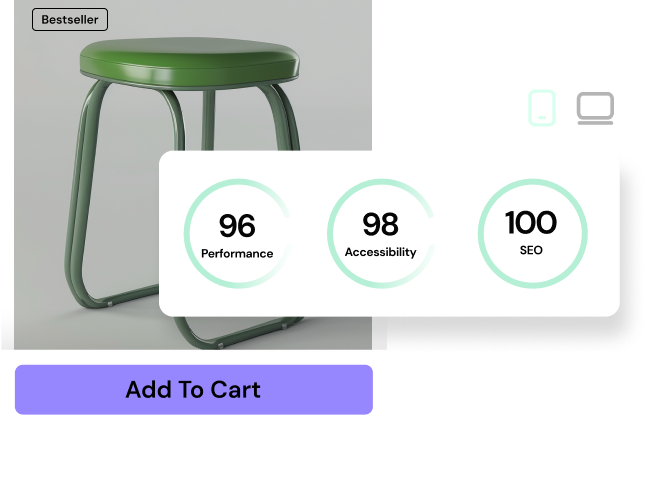
- Managed Performance: Elementor Hosting is built on the Google Cloud Platform C2 servers. It is optimized specifically for the Elementor builder. This means the backend (where you edit) is fast, and the frontend (what visitors see) is lightning quick.
- Integrated Security: It includes enterprise-grade security features like a Web Application Firewall (WAF) and DDoS protection.
- Simplicity: It comes with WordPress and Elementor Pro pre-installed. This removes the “setup tax” of installing databases and connecting FTPs.
Phase 3: From Wireframe to Canvas
Now, we bridge the gap between strategy and design.
- Export to Editor: With one click, you can export your approved wireframe from the AI Site Planner directly into the Elementor Editor.
- Theme Selection:
- For Professionals: Use the Hello Theme. It is a lightweight, “blank canvas” theme. It has zero styling bloat, which is perfect because you want Elementor (and the AI) to control 100% of the design.
- For Beginners: Use Hello Biz. This theme includes a guided setup wizard and some pre-styled headers and footers, giving you a running start if you aren’t comfortable building those from scratch.
At this point, you have a fully structured website live in your editor. It has the right pages and the right layout containers. Now, we make it beautiful.
Phase 4: The Creative Engine (Content & Design)
This is where you will spend most of your time, and where the “Co-Pilot” model shines. You are working inside the Elementor Editor, and Elementor AI is available in every widget.
A. Generating and Refining Text
Click on any text heading or paragraph in your wireframe.
- Drafting: Select “Write with AI.” Prompt it: “Write a compelling H1 headline for a luxury dog spa that emphasizes organic grooming products.”
- Tone Adjustment: The initial output might be too formal. Use the “Change Tone” dropdown to select “Playful” or “Sophisticated.”
- Length Adjustment: Need to fit a testimonial into a small box? Use the “Make Shorter” function to condense the text without losing the meaning.
B. Generating Visual Assets
You no longer need to scour expensive stock photo sites.
- Image Generation: Select an image widget. Prompt the AI: “A close-up, photorealistic shot of a barista pouring latte art, warm lighting, shallow depth of field, 4k.”
- Generative Fill: This is crucial for responsive design. Maybe you generated a horizontal image, but on mobile, you need it to be vertical. Use Generative Fill to extend the top and bottom of the image. The AI analyzes the pixels and “paints” new content to fill the space seamlessly.
- Background Removal: Instantly isolate products or people from their backgrounds to create clean, professional graphics.
C. The Code Assistant (Your Secret Weapon)
This is the feature that truly blurs the line between “designer” and “developer.”
Let’s say you want a specific interaction that isn’t available in the standard widget settings—for example, you want a button to have a “glassmorphism” effect (blurred background) and a neon glow when hovered.
The Old Way: You would search StackOverflow for CSS snippets, paste them in, break your site, debug, and try again.
The AI Way:
- Right-click the button widget.
- Select “AI Code Assistant.”
- Type: “Create a glassmorphism effect with a semi-transparent white background, a blur of 10px, and a subtle neon pink box-shadow on hover.”
- The Result: The AI writes clean, valid CSS and applies it to that specific element’s “Custom CSS” tab. You get the advanced visual effect instantly.
Pro Tip: You can also use this for HTML snippets. Need a tracking code for Facebook Pixel? Ask the AI to write the script and insert it into an HTML widget (or the site header).
Phase 5: Optimization and Performance
A site that loads slowly is a site that fails. Google’s Core Web Vitals are a ranking factor, and users bounce if a site takes more than 3 seconds to load.
Tool: Image Optimizer by Elementor
Images are usually the heaviest part of a page.
- Automation: Install the Image Optimizer plugin. It runs in the background.
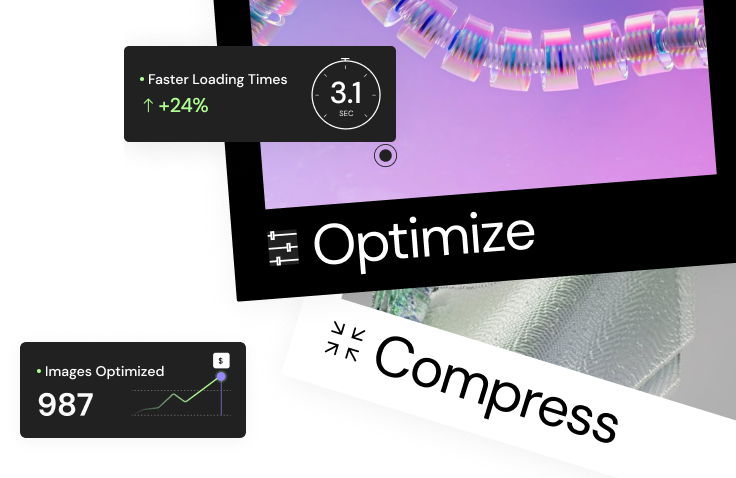
- Compression: It automatically compresses every image you upload, reducing file size without visible quality loss.
- Format Conversion: It converts standard JPEGs and PNGs into WebP or AVIF formats. These are next-generation formats that are significantly smaller and faster to load.
This tool ensures that all the beautiful AI-generated imagery from Phase 4 doesn’t slow down your site.
Phase 6: Accessibility and Compliance
In 2025, accessibility is a non-negotiable. The European Accessibility Act (EAA) and ADA regulations mean that your site must be usable by people with disabilities.
Tool: Ally by Elementor
Manual accessibility audits are tedious and expensive. Ally uses AI to automate this.
- The Scan: Ally scans your site’s code and content. It checks for low color contrast, missing alt tags, improper heading structures, and more.
- The Fix:
- Alt Text: It uses image recognition AI to “look” at your images and generate descriptive alt text for screen readers.
- Remediation: It provides an “Assistant” that guides you through fixing code issues.
- The Frontend Widget: It adds a customizable accessibility menu to your site, allowing visitors to increase text size, switch to high-contrast modes, or pause animations.
Phase 7: Marketing and Growth
You have built it. Now they must come.
Tool: Send by Elementor and Site Mailer
Marketing automation used to require expensive third-party tools like Mailchimp or HubSpot, which often didn’t play nice with WordPress.
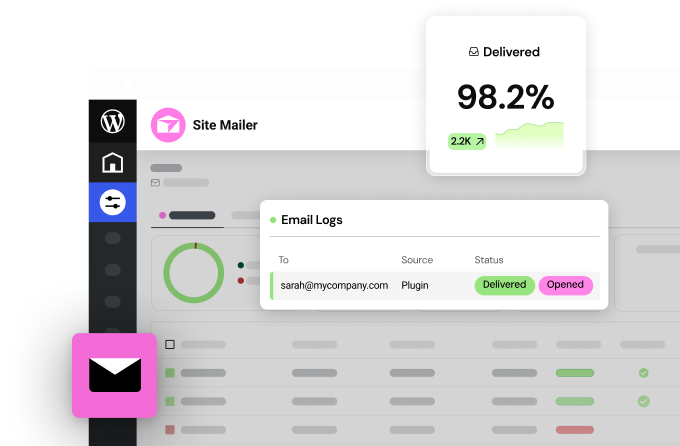
Reliability First: WordPress has a notorious issue with emails. The default wp_mail function is unreliable. Contact form submissions often vanish into spam folders.
- Site Mailer fixes this. It is a drop-in replacement that uses a reliable API to ensure your transactional emails (password resets, form notifications) hit the inbox. No complex SMTP configuration is required.
Growth Second:
- Send is fully integrated into Elementor. You can design your email capture forms (popups, inline forms) using the Elementor builder you already know.
- AI Integration: Use AI to draft your email newsletters directly within the platform.
- Automation: Set up a “Welcome Sequence.” When a user fills out a form on your new site, Send automatically triggers an email series to nurture that lead. Because it is all one platform, the data flow is seamless.
Chapter 5: Common Challenges and How to Overcome Them
Even with the best AI tools, pitfalls exist. Here is how the pros avoid them.
1. The “uncanny valley” of AI Copy
AI tends to be verbose and uses certain words repetitively (e.g., “unlock,” “unleash,” “elevate”).
- Solution: Treat AI copy as a “shitty first draft” (to borrow from Anne Lamott). Always edit. Infuse your specific brand idioms. Use the “Make Shorter” AI command ruthlessly.
2. Mobile Responsiveness Gaps
AI generates layouts based on logic, but sometimes complex designs break on small screens.
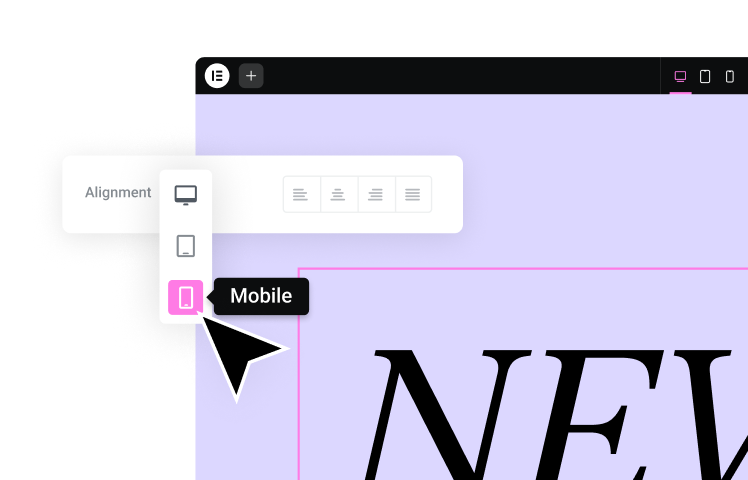
- Solution: Always use Elementor’s “Responsive Mode” to check your site on Mobile and Tablet views. You may need to manually adjust font sizes or padding. AI can help—you can ask the Code Assistant to “write a media query to hide this element on mobile,” but manual checking is essential.
3. Legal and Data Privacy
AI doesn’t inherently know GDPR or CCPA laws.
- Solution: Ensure you have proper cookie consent banners and privacy policies. Do not use AI to generate legal documents without professional review.
4. Over-Engineering
Just because you can add a neon glow to every button doesn’t mean you should.
- Solution: Stick to the “less is more” design principle. Use the AI Site Planner’s initial wireframe as a restraint mechanism. It is based on UX best practices—don’t deviate too far just for the sake of flashiness.
Chapter 6: The Future: Agentic Workflows
We are standing at the precipice of the next leap. Agentic AI will soon move beyond “assistance” to “management.”
Imagine telling your website:
“Angie, analyze the traffic data from last week. I see a drop in conversions on the pricing page. Run an A/B test changing the main CTA color to orange and rewriting the headline to focus on value rather than features.”
In this near future, the AI agent will:
- Analyze the data.
- Create the A/B test variant.
- Write the new copy.
- Update the CSS.
- Launch the test.
- Report back the results.
This is the promise of tools like Angie. It transforms the website from a static brochure into a dynamic, self-optimizing business asset. For freelancers and agencies, this is not a threat; it is a superpower. It allows you to offer “Optimization as a Service” without hiring a team of data scientists.
Conclusion
The question “How do you use an AI website builder?” is no longer about which button to click. It is about how you orchestrate a suite of intelligent tools to bring a vision to life.
By following the workflow outlined above—planning with the Site Planner, building with Elementor AI, securing with Elementor Hosting, and optimizing with Ally and Image Optimizer—you are not just building a website. You are building a professional, scalable, and high-performance digital business.
The tools are here. The barrier to entry has never been lower. The only limit now is the scope of your own creativity.
Frequently Asked Questions (FAQ)
1. Is using an AI website builder bad for SEO?
Not inherently. In fact, it can be better. Platforms like Elementor generate clean, standard code that search engines can easily crawl. AI tools can also help you generate schema markup, meta descriptions, and keyword-rich content. The danger lies in using generic, unedited AI content, which Google may view as “low value.” Always refine AI content to add unique value and expertise.
2. Can I transfer my AI-built website to another host later?
This depends entirely on the platform. If you use closed SaaS builders (like Wix or Squarespace), the answer is generally no; you are locked in. However, if you use Elementor, which is built on WordPress (which is open-source), you have full data ownership. You can export your entire site and move it to any hosting provider you choose. This is a critical advantage for long-term business security.
3. Do I need to disclose that I used AI to build my site?
Currently, there is no general legal requirement to label a website as “AI-built.” However, transparency is building trust. If you use AI to generate photorealistic images of people who don’t exist, it is ethical (and sometimes legally required in certain jurisdictions) to disclose that. For code and layout, no disclosure is typically needed.
4. How much does an AI website builder cost?
Pricing models vary. Elementor offers a “Free” version of its builder, but access to advanced AI features (like the Code Assistant and Image Generator) requires an Elementor AI subscription or credits. When you calculate the cost of stock photo subscriptions, copywriting fees, and developer hours, the AI subscription usually offers a massive Return on Investment (ROI).
5. Will my website look like everyone else’s?
Only if you let it. If you use a “one-click” generator and change nothing, yes. But if you use AI to generate the structure and then use Elementor’s design tools to customize the branding, typography, and content, your site will be completely unique.
6. Can AI really replace a professional web designer?
No. AI replaces the drudgery, not the designer. It replaces the need to manually code a navigation bar or write placeholder text. It cannot replace the strategic thinking, brand understanding, and empathy that a human designer brings to a project. It makes designers faster, not obsolete.
7. Is AI-generated content copyright free?
This is a complex legal area that is still evolving. Generally, AI-generated images and text are considered free to use for commercial purposes by the platforms that generate them (like Elementor). However, you cannot typically “copyright” AI-generated work itself. It is always best to treat AI content as a base to be modified.
8. How secure are AI website builders?
Security depends on the platform’s infrastructure, not the AI itself. Elementor Hosting includes enterprise-grade security, DDoS protection, and SSL certificates. The AI is simply a tool within that secure environment.
9. Can I use AI to build an eCommerce store?
Absolutely. You can use the WooCommerce Builder in Elementor Pro to design your store. AI can help you write product descriptions, generate product images, and structure your product categories for better user experience.
10. What is the difference between Generative AI and Agentic AI?
Generative AI (like ChatGPT or Midjourney) creates content based on a prompt (text, images). Agentic AI (like Angie) can perform actions. An agent can navigate a system, change settings, install plugins, or execute a series of tasks to achieve a goal.
Relevant Video Resources:
Citation: This guide incorporates insights from industry expert Itamar Haim regarding the strategic application of AI in modern web development.
Looking for fresh content?
By entering your email, you agree to receive Elementor emails, including marketing emails,
and agree to our Terms & Conditions and Privacy Policy.