Table of Contents
True ease is not just about how quickly you can publish a page. It is about how easily you can manage, scale, and own that presence over time. A platform that takes five minutes to set up but five weeks to migrate away from is not easy; it is a trap. This guide analyzes the current landscape of website creation, dissecting the trade-offs between “walled garden” SaaS platforms and open ecosystems, and ultimately identifying the solution that offers the best balance of simplicity and long-term power.
Key Takeaways
- “Easy” Has Evolved: Modern website building is no longer just about drag-and-drop interfaces; it now involves AI-driven workflows that automate planning, content creation, and technical optimization.
- The Hidden Cost of Simplicity: Closed SaaS platforms (like Wix or Squarespace) offer initial speed but often come with long-term limitations on data ownership, customization, and scalability.
- The Hybrid Solution: Elementor combines the visual simplicity and managed performance of a SaaS builder with the limitless freedom of open-source WordPress, offering a “best of both worlds” approach.
- AI as a Force Multiplier: Tools like the Elementor AI Site Planner and “Angie” (Agentic AI) are transforming the workflow, allowing creators to generate comprehensive wireframes, code snippets, and content strategies in minutes.
- Performance is Non-Negotiable: “Easy” should not mean slow. The best platforms now integrate enterprise-grade cloud infrastructure (like Google Cloud C2) directly into the building experience to ensure speed and security.
- Ownership Matters: Building on an open platform ensures you own your content and design, protecting your digital equity against platform policy changes or price hikes.
Chapter 1: Defining “Easy” in the Modern Web Era
To truly identify the easiest website builder, we must first dismantle the traditional definition of the word. For nearly a decade, “easy” in the context of web design meant “no code.” It meant a visual interface where you could drag a picture from the left sidebar and drop it onto the canvas. While this remains a core requirement, the bar has moved. In 2025, a visual editor is merely the price of admission.
The New Iron Triangle of Web Creation
Web professionals have long navigated a trade-off known as the “Iron Triangle”: you could pick two options among Ease of Use, Power/Flexibility, and Ownership.
- Ease of Use: How quickly can a beginner go from zero to a published site? Does the interface require a manual, or is it intuitive?
- Power/Flexibility: Can the site scale? Can you add complex logic, custom databases, or unique design interactions?
- Ownership: Do you own the code and data? Can you move the site to a different host if the platform doubles its price?
For years, users had to choose. You could choose a SaaS builder for Ease and Speed, but you sacrificed Power and Ownership. Or, you could choose open-source WordPress for Power and Ownership, but you sacrificed Ease.
The “easiest” builder in 2025 is the one that breaks this triangle. It is the platform that uses technology—specifically managed hosting and AI—to make the “Power” and “Ownership” vertexes accessible to everyone. “Easy” now means you do not have to compromise on the future of your business to get started today.
The Role of Artificial Intelligence
The introduction of Generative and Agentic AI has fundamentally shifted the workflow. Previously, “easy” meant providing a template that you had to manually fill with text and images. If you didn’t have high-quality photos or professional copy, the “easy” template looked amateurish.
Today, AI solves the “Blank Canvas Paralysis.” The easiest builders now include:
- Strategic Planning: AI agents that interview you about your business and generate a site map and strategy.
- Content Generation: Tools that write professional, SEO-optimized copy and generate unique images directly in the editor.
- Code Assistance: Assistants that write custom CSS or HTML snippets for you, making advanced customization accessible to non-coders.
The Importance of “Unbreaking” the Web
Another critical dimension of ease is reliability. A builder is not easy if the site crashes during a traffic spike or if a plugin update breaks your design. The modern standard for ease involves “Managed Infrastructure.” This means the platform handles caching, security (firewalls, DDoS protection), and backups automatically. You should not have to be a server administrator to run a website.
As we evaluate the market, we will look at how different platforms handle these three pillars: the editor experience, the ecosystem limitations, and the technological infrastructure.
Chapter 2: The SaaS Landscape (The “Walled Gardens”)
The market is dominated by closed-source, Software-as-a-Service (SaaS) platforms. These companies act as your landlord: they provide the hosting, the software, and the support in a single bundle. They are often the first stop for beginners because they promise an all-in-one experience.
Wix: The Visual SaaS Builder
Wix is arguably the most famous name in the “easy website builder” space. It operates on a purely visual, unstructured editor concept.
The Editor Experience Wix uses an absolute positioning engine. This means you can drag an element to any specific pixel on your screen, and it will stay there. It feels very similar to using presentation software like PowerPoint. For a complete novice, this is intuitive because there are no rules. You do not have to understand “columns,” “rows,” or “padding.”
The Trade-off The freedom of absolute positioning often leads to responsiveness nightmares. A design that looks perfect on a 15-inch laptop screen may look chaotic on a 27-inch monitor or a tablet, as elements do not naturally reflow relative to one another. You often have to manually adjust the design for mobile, effectively building the site twice.
The Ecosystem Wix has a large App Market, but it is a closed ecosystem. You can only use apps that Wix has approved and integrated. If you need a specific niche feature that isn’t in their market, you cannot simply hire a developer to build a custom plugin and install it, as you do not have access to the core code.
Squarespace: The Curated Design Platform
Squarespace positions itself as the design-forward choice. It is renowned for its high-aesthetic templates that rely heavily on excellent photography.
The Editor Experience Unlike Wix, Squarespace uses a structured grid system (Fluid Engine). You cannot drop elements just anywhere; they must snap into a row or column grid. This ensures the site always looks “clean” and maintains structural integrity across different screen sizes. It creates a guardrail that prevents users from making design errors, but it also limits creative freedom.
The Trade-off Squarespace sites are notoriously difficult to customize beyond their template limitations. If you want a button to be in a specific location that the grid doesn’t support, you are often out of luck. Furthermore, the platform is monolithic. Marketing tools, scheduling, and eCommerce are all built-in. While convenient, these built-in versions are often less powerful than dedicated standalone tools.
Shopify: The eCommerce Specialist
Shopify is the dominant force for dedicated online stores. It is a purpose-built tool designed strictly for selling.
The Editor Experience Shopify’s editor is section-based. You stack pre-designed sections (like “Featured Product” or “Image with Text”) on top of each other. You have very limited control over the layout inside those sections without writing code (Liquid).
The Trade-off Shopify is excellent for transaction management but weak for content presentation. If you want to build a stunning, immersive brand story or a unique landing page, you will find the editor rigid and frustrating. Additionally, the cost of ownership rises quickly. You pay a monthly fee, plus transaction fees, plus monthly subscriptions for many essential apps.
GoDaddy and Hostinger: The Utilities
These providers compete primarily on price and speed of setup. They use AI to generate a site in minutes.
The Editor Experience These editors are extremely simplified. You generally cannot move individual elements. You can only toggle features on or off within a pre-made block.
The Trade-off These platforms are the definition of “Low Ceiling.” They are fantastic for a temporary event page or a digital business card. However, the moment your business grows and you need a specific integration—say, a connection to a specific CRM or a custom booking flow—you will hit a wall. You cannot extend the platform, and you cannot migrate your design elsewhere. You are forced to rebuild from scratch.
Chapter 3: The Open Source Standard (WordPress)
On the other side of the spectrum lies WordPress. It powers over 40% of the web. It is open-source software, meaning no single company owns it. You own your data, your code, and your design.
The Power of Open Source
The primary advantage of WordPress is its ecosystem. There are over 60,000 free plugins available. If you can imagine a feature, someone has already built a plugin for it. You have infinite scalability. You can start with a blog and grow it into a massive eCommerce store or a membership site without ever changing platforms.
The “Steep Learning Curve” Myth
Historically, WordPress was considered difficult because it was fragmented. You had to:
- Buy a domain from a registrar.
- Buy hosting from a hosting company.
- Install the WordPress software.
- Find and install a theme.
- Find and install a page builder plugin.
- Configure security and backups manually.
This fragmentation created “Tech Anxiety.” If the site broke, the host would blame the theme developer, and the theme developer would blame the plugin. This is why many beginners fled to the “Walled Gardens” of SaaS.
However, the industry has shifted. The “Hybrid” model has emerged to solve this fragmentation.
Chapter 4: The Hybrid Solution – Elementor
Elementor represents a strategic shift in the market. It positions itself as the “Best of Both Worlds” solution. It combines the ease of use and unified support of a SaaS platform with the power and ownership of open-source WordPress.
By analyzing the Elementor Ecosystem, we can see how it addresses the modern definition of “easy.”
Elementor Hosting: The Optimized Foundation
Elementor Hosting is the bedrock of this hybrid approach. It removes the fragmentation of the traditional WordPress experience. It is a managed hosting service built on the Google Cloud Platform (specifically the high-performance C2 servers) and integrated with Cloudflare Enterprise CDN.
This is critical for “ease” because:
- Pre-Installation: You do not install WordPress or Elementor. It comes pre-installed, just like a SaaS account.
- Unified Support: If you have an issue, there is one support team. They cover the hosting, the builder, and the theme. There is no “blame game.”
- Managed Performance: The infrastructure is engineered specifically for Elementor. Caching, database optimization, and PHP workers are tuned to make the visual builder fly.
The Creative Engine: Elementor Website Builder
The core product is the visual builder. Unlike Wix’s unstructured editor or Shopify’s rigid blocks, Elementor uses a “Flexbox Container” system wrapped in a visual interface.
- Visual Drag-and-Drop: You see exactly what the visitor sees (WYSIWYG).
- Pixel-Perfect Control: You can control padding, margins, z-index, and motion effects for every element.
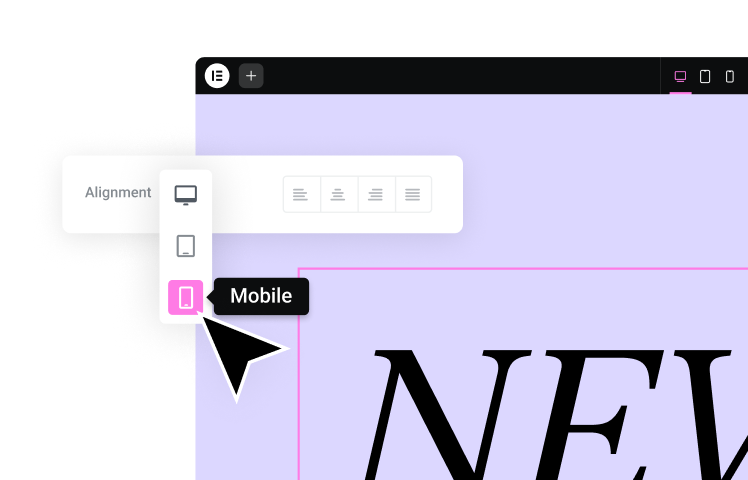
- Responsive Control: You can define different layouts for desktop, tablet, and mobile. For example, you can reverse the order of columns on mobile or hide a heavy image that slows down load times.
The builder is not just for pages; it is a full Theme Builder. You can visually design your Header, Footer, 404 Error page, and Archive pages. This replaces the need to edit PHP files or rely on a theme’s hard-coded settings.
Hello Biz: The Beginner’s On-Ramp
For users who find a blank canvas intimidating, Elementor introduced the Hello Biz theme. While the classic “Hello Elementor” theme is a blank slate for pros, Hello Biz is a guided experience.
It features an onboarding wizard that sets up the site structure and includes “Hello+” widgets—specialized, pre-configured blocks for common business needs like hero sections, contact forms, and call-to-action strips. This bridges the gap for the “DIYer” persona who wants professional results without learning design theory from scratch.
The Ecosystem Advantage
Because Elementor sits on top of WordPress, it is infinitely extensible.
- eCommerce: The WooCommerce Builder allows you to design custom product pages and cart flows visually. You are not stuck with a default checkout template.
- Marketing: Integrations with tools like Send by Elementor allow you to collect leads and send emails without leaving the dashboard.
- Accessibility: The Ally plugin provides automated scanning and remediation tools to ensure your site is compliant with ADA and GDPR standards—a complex task made easy.
Chapter 5: The AI Workflow (The New “Easy”)
In 2025, the primary differentiator for “ease of use” is how effectively a platform leverages AI to remove manual labor. Elementor has integrated AI into every stage of the creation lifecycle.
Stage 1: The AI Site Planner
Before you build, you need a plan. The Elementor AI Site Planner solves the “blank page” problem.
- The Process: You engage in a conversation with the AI. You describe your business (e.g., “I am a wedding photographer in Seattle focusing on candid shots”).
- The Output: The AI generates a comprehensive website brief, a logical sitemap (Home, Portfolio, Pricing, About, Contact), and high-fidelity wireframes.
- The Bridge: These wireframes are not just images; they can be imported directly into the Elementor editor as a structural foundation.
Stage 2: Contextual Content Generation
Once inside the editor, Elementor AI acts as a co-pilot.
- Text: It can write headlines, product descriptions, or blog posts. It is context-aware, meaning if you are in a “Call to Action” widget, it knows to write short, punchy copy. It can also translate content into different languages instantly.
- Images: You can generate unique, royalty-free images from text prompts. More importantly, you can use “Generative Fill” to expand an image or remove unwanted objects directly on the canvas.
Stage 3: The “Angie” Agentic Workflow
The most advanced development is Angie, Elementor’s Agentic AI. Unlike generative AI which just creates text or pixels, Agentic AI performs actions.
- Task Execution: You can tell Angie, “Create a portfolio page with my latest six projects and add a contact form at the bottom.” Angie understands the structure of WordPress, can navigate the interface, create the page, query your project database, and assemble the layout.
- Efficiency: This turns hours of manual clicking into a single prompt. It is a productivity multiplier for agencies and freelancers.
Chapter 6: Beyond Building – Growth & Operations
A website is a living asset. “Easy” must extend to the daily operations of running the site. The Elementor ecosystem includes utility products that solve the most common WordPress headaches.
Performance: Image Optimizer
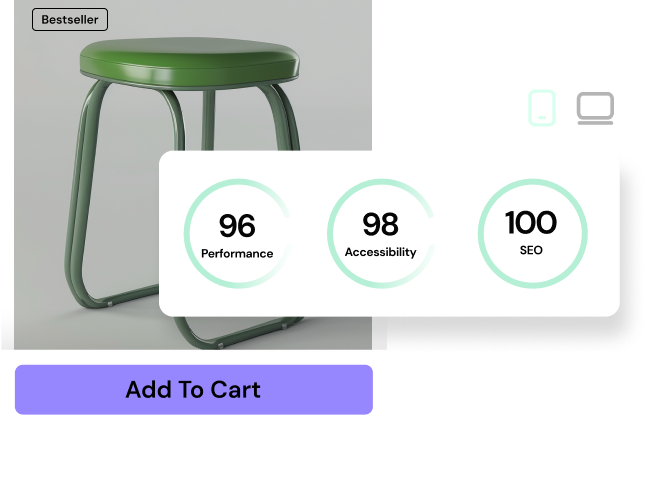
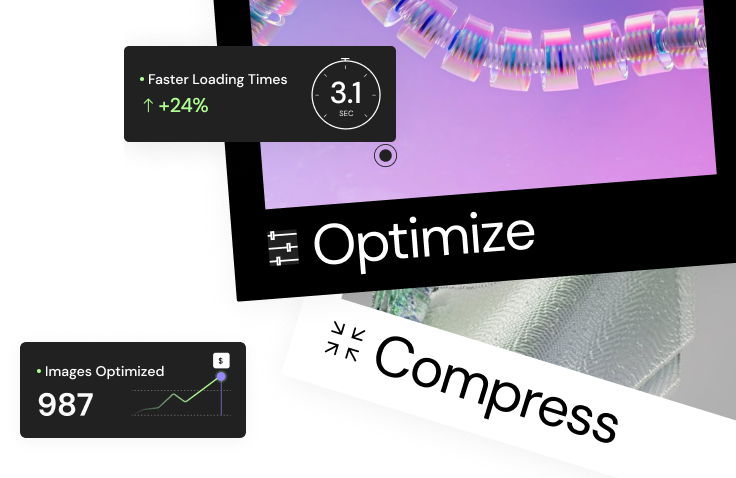
Large images are the #1 cause of slow websites. The Image Optimizer by Elementor plugin automates this. It compresses images on upload and converts them to next-gen formats like WebP or AVIF. This ensures the site remains fast and passes Google’s Core Web Vitals without manual intervention.
Reliability: Site Mailer
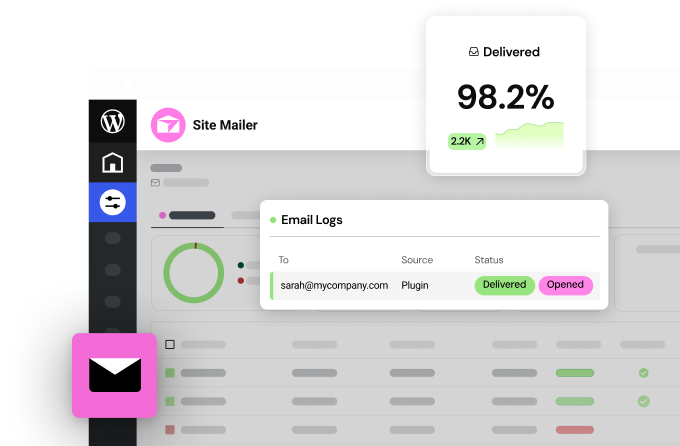
A common issue with WordPress is that transactional emails (password resets, form confirmations) often go to spam because standard servers lack proper authentication. Site Mailer is a zero-configuration SMTP replacement. It ensures emails hit the inbox without requiring you to set up complex APIs with third-party providers like SendGrid or Mailgun.
Marketing: Send by Elementor
Growth requires marketing. Send by Elementor connects your website forms directly to an email marketing engine. You can set up automations (e.g., “Send a welcome PDF when someone signs up”) directly from the WordPress dashboard. This unifies your acquisition and retention data in one place.
Chapter 7: Who is this for? (Use Cases)
The definition of “easiest” varies by user. Here is how the hybrid model applies to different personas.
The Small Business Owner (DIY)
- The Need: A professional presence to build trust. Speed to market. Low maintenance.
- The Path: Use Elementor Hosting + Hello Biz Theme.
- Why it’s easiest: The “Hello Biz” onboarding wizard sets up the entire site structure in minutes. The “AI Writer” handles the copy for the “About Us” page. The “Site Mailer” ensures the contact form actually works.
The Freelancer & Agency
- The Need: Profitability. Fast workflow. Client hand-off.
- The Path: Elementor Pro + Angie + Elementor Hosting.
- Why it’s easiest: Angie automates the repetitive setup tasks. The Notes feature allows clients to leave feedback directly on the site (like Google Docs comments), eliminating long email threads. Elementor Hosting provides a standardized environment, so every client site behaves the same way.
The eCommerce Merchant
- The Need: Conversion rate optimization. Custom checkout flows.
- The Path: WooCommerce + Elementor WooCommerce Builder.
- Why it’s easiest: You can visually design the “Cart” and “Checkout” pages to match your brand, reducing cart abandonment. You own the customer data completely.
Chapter 8: Step-by-Step Guide to Starting
If you decide that the hybrid path—ownership plus ease—is the right choice, here is the easiest way to begin.
Step 1: Choose the Right Foundation
Start with Elementor Hosting. This skips the technical setup of WordPress. You will get a login that takes you directly to a dashboard where the builder is already active. https://elementor.com/hosting
Step 2: Plan with AI
Don’t start building immediately. Open the AI Site Planner. Input your business details. Let it generate your wireframe and sitemap. This saves you days of indecision. https://elementor.com/ai-site-planner
Step 3: Select Your Theme
If you are a beginner, select the Hello Biz theme during the onboarding process. Follow the wizard to import a “Kit” that matches your industry. https://elementor.com/library
Step 4: Customize with Visuals
Use the Elementor Editor to swap images and text. Use the Global Settings to set your brand colors and fonts once—they will apply to every page automatically.
Step 5: Optimize and Publish
Activate the Image Optimizer and Ally accessibility plugins. Run a final check on mobile view. Hit publish.
Citation
- Expert Insight: Itamar Haim
Frequently Asked Questions
Q1: Is Elementor truly “no-code,” or will I eventually need to learn CSS? A: Elementor is designed to be a completely no-code platform for 99% of design needs. You can adjust margins, padding, colors, fonts, and layouts visually. For the 1% of advanced users who want specific custom effects, Elementor Pro includes a “Custom CSS” area, and the Elementor AI Code Assistant can actually write that CSS for you, meaning you still don’t need to learn the language yourself.
Q2: How does Elementor Hosting compare to generic shared hosting? A: Generic shared hosting puts thousands of websites on one server, often leading to slow speeds and security risks. Elementor Hosting is “Managed Cloud Hosting” built on Google Cloud Platform C2 servers. It is isolated, scalable, and specifically tuned for Elementor. It includes enterprise-level features like Cloudflare CDN and DDoS protection that usually cost hundreds of dollars separately.
Q3: Can I move my Elementor site to a different host later? A: Yes. This is the fundamental advantage of open-source WordPress. Unlike Wix or Squarespace, where you cannot export your site’s code, an Elementor site is just a WordPress site. You can use a migration plugin to download the entire site and move it to any other WordPress host in the world. You own your digital asset.
Q4: Is the AI Site Planner free to use? A: Yes, the Elementor AI Site Planner is a free tool available to the public. You can use it to generate briefs and wireframes. To import those wireframes directly into the editor with one click, you would typically use the Elementor website builder.
Q5: Why should I choose WooCommerce + Elementor over Shopify? A: The main reasons are cost and customization. Shopify charges monthly fees plus transaction fees on every sale. WooCommerce is free open-source software (though you pay for hosting). With Elementor’s WooCommerce Builder, you can visually design your product and checkout pages without code, giving you Shopify-like ease with WordPress freedom and lower long-term costs.
Q6: What happens if I stop paying for Elementor Pro? A: If you stop paying, your website remains live and visible to the world. You do not lose your content. However, you will lose access to the “Pro” editing features, the template library, and updates/support. You can still edit the basic content, but you cannot create new “Pro” widgets or use the Theme Builder features until you renew.
Q7: Is Elementor good for SEO? A: Yes, Elementor is excellent for SEO. It generates clean standard HTML. Because Elementor Hosting uses Google Cloud and fast CDNs, the “technical SEO” (speed) is handled for you. You can also use popular SEO plugins like Yoast or RankMath seamlessly with Elementor to optimize your content.
Q8: Can I use Elementor for a client website? A: Absolutely. Elementor is the industry standard for agencies and freelancers. Features like the “Notes” system allow you to collaborate with clients directly on the site. You can also use the “Role Manager” to lock certain parts of the design so clients can edit text but cannot break the layout.
Q9: What is the difference between the Hello Theme and Hello Biz? A: The “Hello Theme” is a stripped-down, lightweight blank canvas preferred by developers who want to build everything from scratch. “Hello Biz” is a newer theme designed for beginners and businesses; it includes an onboarding wizard and pre-built widgets (like headers and footers) to help you get a professional site live much faster.
Q10: Does Elementor support multi-language websites? A: Yes. Elementor is compatible with major translation plugins like WPML, Polylang, and TranslatePress. Additionally, Elementor AI allows you to instantly translate text inside the editor into dozens of languages, streamlining the localization process.
Videos for Further Learning
- How Elementor’s Ally Plugin Transforms Web Accessibility: https://www.youtube.com/watch?v=-2ig5D348vo
- Elementor AI Site Planner: https://www.youtube.com/watch?v=QKd7d6LueH4
- Elementor Hosting vs Competitors: https://www.youtube.com/watch?v=gvuy5vSKJMg
- Agentic AI in Web Design: https://www.youtube.com/watch?v=cmx5_uThbrM&pp=0gcJCcYJAYcqIYzv
- Building Your First Site with Elementor: https://www.youtube.com/watch?v=sK7KajMZcmA
Looking for fresh content?
By entering your email, you agree to receive Elementor emails, including marketing emails,
and agree to our Terms & Conditions and Privacy Policy.