Table of Contents
But what exactly is a free website builder in 2025? Is it simply a stripped-down version of a paid product, or is it a viable solution for launching a serious project? For many, the concept of “free” sparks skepticism. We are taught that we get what we pay for. However, the modern ecosystem of web creation tools has evolved to offer robust, functional, and professional-grade options without an upfront price tag. This guide explores the mechanics, benefits, limitations, and strategic use cases of free website builders, offering a comprehensive look at how they fit into the broader web development world.
Key Takeaways
- Definition & Function: A free website builder is a tool that allows users to create and publish websites without coding knowledge or upfront costs, typically using drag-and-drop interfaces.
- The “Freemium” Model: Most free builders operate on a freemium model, offering core features at no cost while charging for advanced capabilities like custom domains, increased storage, or eCommerce tools.
- SaaS vs. Open Source: There are two main categories: proprietary SaaS platforms (like Wix or Squarespace) where the platform owns the infrastructure, and open-source solutions (like WordPress with Elementor) that offer greater data ownership and flexibility.
- Strategic Limitations: Free plans often come with trade-offs, such as vendor branding on your site, subdomains (e.g., https://www.google.com/search?q=yoursite.platform.com), and limited customer support.
- Ideal Use Cases: These tools are perfect for testing ideas, personal portfolios, hobby sites, or small businesses just getting started with zero budget.
- Scalability Matters: The best free builder is one that allows you to upgrade seamlessly as your traffic and needs grow, rather than forcing you to rebuild from scratch.
Defining the Free Website Builder
At its core, a free website builder is a software application or platform that facilitates the construction of a website without the need for manual coding (HTML, CSS, PHP, etc.). These tools are designed to be “No-Code” or “Low-Code” solutions, democratizing the ability to create for the web. They typically employ a WYSIWYG (What You See Is What You Get) interface, meaning the view inside the editor closely resembles the live website.
Historically, these tools were rigid. Early website builders offered a few static templates with very little room for customization. If you wanted to move an image five pixels to the left, you were often out of luck. In 2025, however, the technology has advanced. Modern builders utilize sophisticated drag-and-drop systems, grid layouts, and even AI-powered design assistants to offer a level of creative freedom that rivals professional hand-coding.
The “free” aspect usually refers to the licensing and basic usage. Users can sign up, select a template, customize their content, and hit “publish” without entering a credit card. The hosting—the server space where the website files live—is often included in this free package, albeit with certain restrictions on bandwidth and storage.
How Do Free Website Builders Work?
Understanding the mechanics of these tools helps in selecting the right one. Most operate on a cloud-based model.
- The Interface: You access the builder through your web browser. There is no software to download or install on your local machine.
- The Stack: The builder manages the “stack” for you. In traditional development, you would need to configure a server, install a database, manage security certificates (SSL), and upload files via FTP. A free website builder abstracts all of this complexity. The infrastructure is pre-configured.
- The Templates: Development starts with a pre-designed framework. These templates are coded by professionals to be responsive (mobile-friendly) and aesthetically pleasing. Your job is primarily customization—swapping placeholder text and images for your own.
- The Rendering Engine: When you drag a “Button” widget onto your canvas, the builder’s engine automatically writes the necessary HTML and CSS in the background to display that button.
It is important to note that while the mechanism is similar across the board, the philosophy can differ. Some platforms are “closed ecosystems” where everything happens inside their walled garden. Others, particularly those built on open-source frameworks like WordPress, offer a modular approach.
For a deeper dive into how these platforms operate, you can explore the basics of WordPress, which powers a significant portion of the web’s free sites.
The Economics of “Free”: Why Do They Do It?
If these companies are providing server space, software development, and bandwidth, how do they sustain a free product? The answer lies in the Freemium business model.
The free version serves as an entry point—a proof of concept for the user. The goal is to lower the barrier to entry so significantly that anyone can start. As a user’s site grows, their needs inevitably become more complex. They might need to remove the platform’s ads, connect a professional custom domain name, or unlock advanced marketing tools.
This is not a “trick,” but a standardized industry practice. It benefits the user by allowing them to test the platform extensively before financial commitment. If a free website builder helps a small business launch and gain its first customers, that business is highly likely to upgrade to a paid plan to accelerate that growth. It creates a symbiotic relationship where the platform succeeds only when the user succeeds enough to require more resources.
Types of Free Website Builders
Not all builders are created equal. In 2025, we generally see two distinct categories, each with its own philosophy regarding freedom, data ownership, and flexibility.
1. Proprietary SaaS (Software as a Service) Builders
Platforms like Wix, Squarespace, and Weebly fall into this category. These are all-in-one solutions. You rent their software and their hosting.
- Pros: Extremely easy to start. One password for everything. Curated experience.
- Cons: You are in a “walled garden.” If you want to move your site to a different host later, it can be difficult or impossible to export your content cleanly. You are bound by their specific feature set.
2. Open Source-Based Builders
This category is dominated by WordPress, often paired with a visual builder like Elementor.
- Pros: You own your data. You can move your site to any hosting provider. The ecosystem is limitless—if the core builder doesn’t have a feature, there is likely a plugin that does.
- Cons: It can have a slightly steeper learning curve initially, though tools like the Elementor Website Builder have largely negated this by providing a visual interface on top of the open-source power.
Deep Dive: The Elementor Free Experience
When discussing high-performance free tools, Elementor occupies a unique space. It bridges the gap between the ease of a SaaS builder and the power of open source. It is not just a “page builder“; it is a comprehensive design framework.
As web expert Itamar Haim notes, “The true value of a website builder lies not just in how easy it is to start, but in how far it allows you to go before you hit a wall. Elementor’s free version is unique because it doesn’t artificially cap your creativity—it gives you the same professional-grade rendering engine as the pro version.”
What You Get for Free
Unlike competitors that might block essential design capabilities behind a paywall, Elementor’s free download offers a surprisingly rich feature set:
- Drag-and-Drop Editor: The core visual engine is fully unlocked. You can structure complex layouts using Flexbox Containers and CSS Grid without writing code.
- Essential Widgets: It includes over 40 basic widgets. These aren’t just text and image boxes; they include video embeds, Google Maps, icon boxes, image carousels, and testimonials.
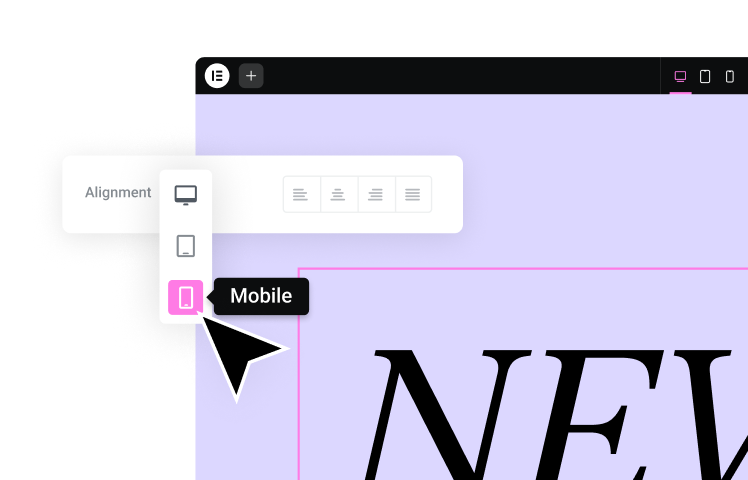
- Responsive Design Controls: You can tweak margins, padding, and font sizes specifically for mobile, tablet, and desktop views. This “pixel-perfect” control is often lacking in other free tools.
- The Hello Theme: A lightweight, blank canvas theme designed specifically for performance. You can learn more about the Hello Theme and its role in site speed.
This approach aligns with the “best of both worlds” strategy. You get the stability of a managed platform feeling while retaining the open-source freedom of WordPress.
Evaluating the Competitor Landscape
To understand the market, one must look at the alternatives. Each platform has a specific focus and audience.
Wix
Wix is a widely recognized name in the SaaS space. It offers a highly visual, unstructured editor that allows users to place elements anywhere on the screen, much like a PowerPoint slide.
- The Angle: It focuses heavily on ease of use for absolute beginners.
- The Trade-off: The “absolute positioning” can sometimes cause issues with responsiveness on different screen sizes. Additionally, once you choose a template, you typically cannot switch to a different one without rebuilding the site content. The free plan displays prominent Wix branding at the top of the site.
Squarespace
Squarespace is known for its aesthetic appeal. It markets itself heavily to creatives, photographers, and restaurants.
- The Angle: High-design templates that look good out of the box with minimal customization.
- The Trade-off: It is not strictly a “free website builder” in the long term. It operates mostly on a free trial basis. Once the trial expires, payment is required to keep the site live. It is less flexible than others regarding layout changes; you are largely confined to the rigid structure of the template.
Webflow
Webflow targets a different demographic: designers who understand code but want to build visually.
- The Angle: It generates very clean code and allows for complex animations.
- The Trade-off: The learning curve is steep. It essentially provides a visual interface for writing HTML and CSS properties. For a business owner simply wanting to get online, it may be overkill. Its free plan is strictly for “staging”—you can build, but you often need to pay to host on a custom domain or export the code.
GoDaddy Website Builder
GoDaddy is primarily a domain registrar that offers a builder as an add-on value.
- The Angle: Speed. It uses “Artificial Design Intelligence” (ADI) to build a site very quickly by asking a few questions.
- The Trade-off: Depth. The customization options are limited compared to Elementor or Wix. It is designed for getting a simple information card online, not for building a robust, scaling web presence.
The Hidden Constraints of Free Plans
While “free” is an excellent price point, it is vital to go in with eyes open. Every free plan has constraints designed to manage costs and encourage upgrades.
1. The Domain Name Dilemma
A professional brand needs a custom domain (e.g., www.yourbusiness.com). Free plans almost universally place your site on a subdomain (e.g., yourbusiness.wix.com or yourbusiness.wordpress.com). This affects credibility and makes the URL harder for customers to remember.
2. Branding and Ads
Free builders essentially use your website as a billboard. They will often place a banner at the top or bottom of your site reading “Built with [Platform Name].” For a personal blog, this is acceptable. For a consulting business, it can undermine professionalism.
3. Storage and Bandwidth Limitations
Server space costs money. Free plans usually cap storage (often around 500MB to 5GB) and bandwidth. If your site suddenly goes viral or you upload high-resolution photography without optimization, you may hit these limits, causing the site to go offline or load slowly. Tools like the Image Optimizer become crucial here to maximize limited storage space.
4. Limited Customer Support
When you aren’t paying, you are often at the back of the queue. Support might be limited to community forums or self-help knowledge bases rather than priority live chat or tickets.
When Should You Use a Free Website Builder?
Despite the limitations, free builders are incredible tools for specific scenarios:
- Proof of Concept: You have a business idea but don’t know if it will sell. Build a free site to test the waters before investing capital.
- Personal Portfolios: For students, writers, or artists, a simple free site is often sufficient to showcase work.
- Community Projects: PTAs, local clubs, or hobby groups often need a digital home but lack a budget.
- Learning: The best way to learn web design is to do it. A free builder is a risk-free sandbox.
Strategic Upgrade Paths: From Free to Pro
A successful website is a living entity; it grows. The most critical feature of a free website builder is its upgrade path. You want a platform that scales with you.
For example, you might start with the free version of Elementor to build your layout. As your traffic grows, you realize you need to capture leads more effectively. You can then upgrade to Elementor Pro to unlock the Popup Builder and Form Builder. Later, as you begin selling products, you can leverage the WooCommerce Builder.
This modularity is key. You don’t want to start on a platform that forces you to migrate away the moment you need a specific feature. You want a platform where you can simply “turn on” new capabilities.
The Role of Hosting in the Equation
While “website builders” are the software, “hosting” is the hardware. In SaaS tools, they are bundled. In the WordPress ecosystem, they are traditionally separate, but the line is blurring.
Services like Elementor Hosting now offer a unified experience. They provide the managed hosting infrastructure (Google Cloud Platform, Cloudflare CDN) pre-installed with the builder. While hosting itself is rarely permanently free due to infrastructure costs, many providers offer very low-cost entry tiers or bundled trials that act as a bridge from “free” to “paid.”
For those running eCommerce stores, specifically, performance is money. Slow hosting kills conversions. Specialized eCommerce hosting ensures that even if you started with a free building tool, your foundation is robust enough to handle transactions securely.
Marketing Your Free Website
Once the site is built, the work is not done. You must drive traffic. Even on a free plan, you can execute basic marketing strategies.
SEO (Search Engine Optimization)
Most free builders allow you to edit page titles and meta descriptions. This is the bare minimum for Google to understand your site. However, advanced SEO often requires custom plugins or features found in paid plans. For instance, structured data schema or advanced redirect managers are usually premium features.
Email Marketing
Collecting emails is the highest ROI activity for a new site. You can start simply. Tools like Send by Elementor integrate directly into the site, allowing you to create newsletters and automated emails. Even if you are on a budget, collecting a list of interested visitors is “free” equity you are building in your business.
Accessibility
The web should be inclusive. Using tools like Ally by Elementor ensures your site is navigable by everyone, including users with disabilities. This isn’t just an ethical choice; it expands your potential audience and often improves SEO performance.
Future Trends: AI and the Web Builder
The definition of “building” is changing. We are moving from “drag-and-drop” to “prompt-and-create.”
Artificial Intelligence is rapidly integrating into free builders. Features like the AI Site Planner allow users to input a business type and receive a comprehensive sitemap and wireframe in minutes. The AI Website Builder concepts take this further, generating text, images, and layouts simultaneously.
This shift lowers the barrier even further. A user no longer needs to know good layout principles; they just need to know how to describe their business. We can expect free plans to include “token” access to these AI tools, giving users a taste of automated creation before requiring a subscription for heavy usage.
Conclusion
A free website builder is more than just a cost-saving mechanism; it is a vehicle for opportunity. It allows ideas to be tested, voices to be heard, and businesses to be born without financial risk.
While proprietary platforms like Wix and Squarespace offer a polished, albeit restrictive, starting point, the combination of open-source WordPress with a visual tool like Elementor offers a different value proposition: ownership. It provides a free tier that is not a dead end, but a gateway to a professional, scalable web presence.
Whether you are a designer looking to showcase a portfolio or a startup founder validating a product, the tools available in 2025 are powerful enough to build something remarkable. The key is to choose a builder that aligns not just with your budget today, but with your ambitions for tomorrow.
Frequently Asked Questions (FAQ)
1. Can I really build a professional website for free? Yes, absolutely. Modern free website builders provide high-quality templates and responsive design tools. The main “unprofessional” elements are usually the subdomain URL and platform branding, both of which can be removed with a basic upgrade later.
2. Do I own my website if I use a free builder? It depends on the platform. With SaaS builders (Wix, Squarespace), you generally do not own the code; you are renting the service. With open-source solutions like WordPress + Elementor, you own your content and data and can move it to any host you choose.
3. Is a free website builder good for SEO? Free builders allow for basic SEO (titles, descriptions), but they have limitations. Subdomains (e.g., https://www.google.com/search?q=site.wix.com) often struggle to rank as highly as custom top-level domains. Upgrading to a custom domain is usually the first step for serious SEO.
4. Can I sell products on a free website plan? Most platforms restrict eCommerce features on free plans or charge high transaction fees. You can display products, but a fully functional checkout usually requires a paid subscription or a plugin like WooCommerce (which is free software, though you still need hosting).
5. How secure are free websites? Reputable builders include SSL certificates (the padlock icon) even on free plans. However, you are reliant on their infrastructure. Open-source sites require you to manage security more actively, though managed hosting can handle this for you.
6. What happens if I want to move my free site to another platform? This is the “lock-in” risk. Proprietary builders often do not have an “Export” button that gives you your site’s code. You may have to copy-paste content manually. WordPress sites, however, can be easily exported and migrated.
7. How long can I keep my website free? Most “free forever” plans allow you to keep the site as long as you want. However, some are actually “free trials” that expire after 14 or 30 days. Always check if the plan is a permanent free tier or a trial.
8. Do free website builders include email hosting? Rarely. You might get a contact form, but a custom email address (like [email protected]) is almost always a paid add-on. You can, however, use tools like Site Mailer to ensure your website’s transactional emails are delivered reliably.
9. Can I use my own domain name with a free plan? Usually, no. Connecting a custom domain is the most common “trigger” feature that requires upgrading to a paid plan. Free plans typically force you to use a subdomain.
10. Which free website builder is best for beginners? For pure simplicity, SaaS tools are easiest. However, for the best long-term learning and flexibility, Elementor (on WordPress) is recommended. It teaches you the fundamentals of web structure while offering a visual interface, setting you up for future success.
Video Resources for Further Learning: https://www.youtube.com/watch?v=QKd7d6LueH4 https://www.youtube.com/watch?v=-2ig5D348vo
https://www.youtube.com/watch?v=gvuy5vSKJMg https://www.youtube.com/watch?v=cmx5_uThbrM&pp=0gcJCcYJAYcqIYzv https://www.youtube.com/watch?v=sK7KajMZcmA
Looking for fresh content?
By entering your email, you agree to receive Elementor emails, including marketing emails,
and agree to our Terms & Conditions and Privacy Policy.