Table of Contents
For many digital professionals and business owners, the initial allure of “free” often masks the long-term reality of “rented.” While a free proprietary builder offers a quick start, it can inadvertently place a ceiling on your brand’s potential before you’ve even launched. Understanding the nuances of what is truly free, versus what is merely a trial for a paid ecosystem, is critical for making a decision that serves your business five years from now, not just five minutes from now.
This comprehensive guide explores the reality of GoDaddy’s free offering, dissects the technical limitations of proprietary builders, and illuminates the strategic advantages of open platforms like Elementor that prioritize ownership, design freedom, and scalable growth.
Key Takeaways
- GoDaddy Does Have a Free Plan: You can build and publish a site for free, but it will live on a godaddysites.com subdomain and display GoDaddy branding at the top of every page.
- The “Leased” vs. “Owned” Distinction: GoDaddy’s free builder is a proprietary “walled garden.” You do not own the code, and you cannot migrate your design elsewhere. In contrast, platforms like Elementor on WordPress offer full data ownership and portability.
- Design Limitations are Structural: GoDaddy uses a rigid, section-based editor. You cannot drag-and-drop elements freely. Elementor provides pixel-perfect control, allowing you to design unique brand identities without template constraints.
- The “Free” Ceiling: Essential features for growth—like connecting a custom domain (e.g., yourname.com), accepting payments, and advanced SEO tools—are locked behind paid upgrades in GoDaddy’s ecosystem.
- Open Source Offers a Superior “Free” Path: The free version of the Elementor plugin, paired with open-source WordPress, offers professional-grade design capabilities and extensibility that far exceed GoDaddy’s free tier, though it requires a basic hosting foundation.
The Reality of the “Free” Website Builder Market
To truly understand GoDaddy’s offering, we must first contextualize the modern landscape of “free” website creation. In the early days of the web, “free” often meant hand-coding HTML on a university server. Today, “free” is a business model, typically structured in one of three ways:
- The Freemium SaaS Model: This is where GoDaddy operates. You get the software for free, but the “price” is your brand identity (subdomains and ads) and your data portability. The goal is to upsell you to a subscription.
- The Open Source Model: This is where WordPress and Elementor operate. The core software is free to download, modify, and own. You pay only for the infrastructure (hosting) and premium tools you choose to add.
- The Time-Limited Trial: Many competitors offer a 14-day trial that deletes your site if you don’t pay. GoDaddy distinguishes itself by offering a permanent free tier, which is a significant advantage for users with absolutely zero budget who need a placeholder online.
Decoding GoDaddy’s “Websites + Marketing” Free Plan
GoDaddy’s builder is designed for speed. The onboarding process is heavily automated: you answer a few questions about your industry and business name, and the system generates a template pre-filled with stock images and generic text.
What You Get for Free:
- Access to the Editor: You can use the drag-and-drop (really “click-and-move”) editor to customize sections.
- Mobile Responsiveness: The rigid grid system ensures sites look acceptable on mobile devices automatically.
- Basic Marketing Tools: Limited access to email marketing sends and social media post scheduling.
- SSL Security: A basic SSL certificate is included to ensure the site loads with HTTPS.
- 24/7 Support: Access to GoDaddy’s customer care guides.
The Strategic Compromises: The limitations of the free plan are not accidental; they are strategic friction points designed to encourage conversion to a paid plan.
- The Domain Problem: You cannot connect a custom domain (like www.mybusiness.com) on the free plan. Your site is hosted at https://username.godaddysites.com. In the world of digital marketing, a subdomain signals to customers and search engines that the business is either new, temporary, or unestablished. It erodes trust before a visitor even reads your content.
- The Branding Tax: A banner advertising “Powered by GoDaddy” remains at the top of your website. You are effectively paying for your hosting by acting as a billboard for the service provider.
- The eCommerce Wall: While you can set up a store and list products, you cannot accept actual payments on the free plan. It functions as a digital catalog rather than a transactional store. To take money, you must upgrade.
- Search Engine Invisibility: While basic SEO settings are available, the inherent disadvantage of a subdomain combined with the inability to access advanced SEO settings makes it difficult to rank competitively in Google search results.
Deep Dive: The User Experience of GoDaddy’s Free Builder
When you enter the GoDaddy editor, you encounter a simplified, linear interface. It is built on a “section-based” architecture. This means you build a page by stacking horizontal slices—a header slice, an “About Us” slice, a “Gallery” slice, and a footer slice.
The “Section-Based” Constraint
For a novice user with no design eye, this is helpful. It is hard to “break” the design because the guardrails are so tight. You cannot accidentally drag a button five pixels to the left and misalign it, because the editor simply won’t let you.
However, for anyone trying to build a unique brand identity, this becomes a straightjacket.
- Lack of Granular Control: You cannot adjust the padding of a specific text box, change the z-index of an image to create a layering effect, or position a call-to-action button exactly where it draws the most attention. You are limited to the layout options provided in the sidebar (e.g., “Image Left, Text Right” or “Image Center, Text Below”).
- Homogenized Aesthetics: Because every GoDaddy site uses the same library of pre-set sections, they tend to share a “corporate template” look. It is difficult to inject personality or brand-specific flair that distinguishes your business from competitors.
The “Marketing” in Websites + Marketing
GoDaddy bundles marketing tools into the free dashboard. You get a “marketing score” (InSight™) that suggests actions to improve your presence.
- Social Media: You can create basic posts for Facebook and Instagram using GoDaddy Studio (a Canva-like tool included in the bundle).
- Email Marketing: You can send a limited number of newsletters per month.
While convenient, these tools are often “lite” versions of dedicated platforms. As a business grows, you will likely find the email marketing features lack the automation logic of dedicated tools, and the social scheduling lacks the depth of specialized social media management software.
The Alternative Paradigm: The Open Web and Elementor
To answer the search intent fully, we must look at what “free” means in the context of professional web development. If GoDaddy is a “furnished apartment” where you pay rent and can’t paint the walls, WordPress with Elementor is a “custom home” where you own the land and the building.
Introducing the Elementor Ecosystem
Elementor is not just a page builder; it is a comprehensive Website Creation Platform built on top of WordPress. It powers over 18 million websites, making it the dominant framework for modern web design. Its philosophy is fundamentally different from GoDaddy’s: it prioritizes Empowerment and Ownership.
The “Free” Version of Elementor
Unlike GoDaddy’s free plan which is a “trial” for a paid outcome, the free version of the Elementor plugin is a robust, professional-grade design engine.
- True Visual Editing: Elementor offers a true drag-and-drop canvas. You can place a widget anywhere, adjust its margin and padding to the pixel, and control its behavior on mobile, tablet, and desktop independently.
- 40+ Core Widgets: The free version includes all the building blocks needed for a standard site: Headings, Images, Text Editors, Videos, Buttons, Dividers, Google Maps, and Icons.
- No Branding: Elementor does not force a “Powered by Elementor” banner on your site. The design is 100% yours.
The Cost of “Free” Open Source
There is a catch, of course. To use Elementor, you need a WordPress installation. While WordPress software is free, you need a place to host it. This means you must pay for web hosting. However, this cost is often comparable to or lower than the eventual upgrade cost of a proprietary builder, and it unlocks a different tier of value: Asset Ownership. When you build on GoDaddy, if you stop paying, your site disappears. If you want to move to another provider, you cannot export your site; you must rebuild it from scratch. When you build with Elementor on WordPress, you own the files. You can pick up your site and move it to any hosting provider in the world.
Comparative Analysis: Feature by Feature
Let’s break down the capabilities of GoDaddy’s free offering against the Elementor Free plugin (running on a basic self-hosted WordPress setup).
1. Customization and Design Freedom
GoDaddy Free:
- Method: Sidebar selection of pre-made layouts.
- Flexibility: Low. You can change colors and fonts globally, but cannot style individual elements easily.
- Mobile: Automatic, but you cannot edit the mobile view specifically.
Elementor Free:
- Method: Live drag-and-drop on the canvas.
- Flexibility: Unlimited. You can adjust margins, padding, backgrounds, borders, and typography for every single widget.
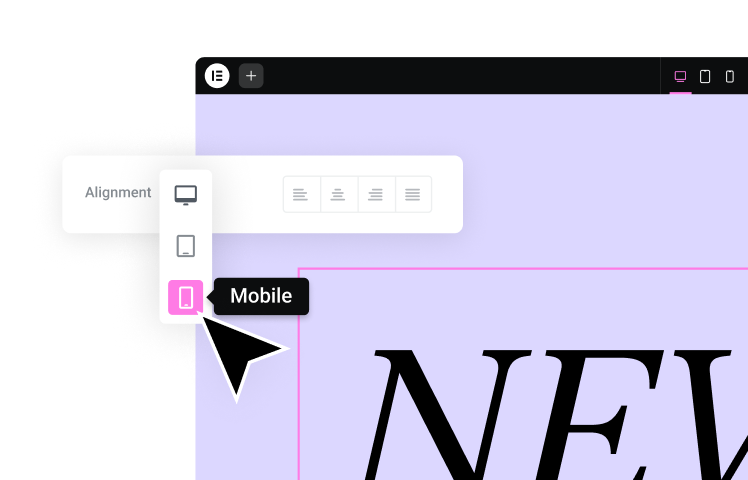
- Mobile: Full control. You can hide specific elements on mobile, change font sizes for different devices, and reverse column ordering for better mobile flow.
2. Marketing and SEO
GoDaddy Free:
- SEO: Basic meta tags. Advanced features are often locked.
- Analytics: Basic dashboard included.
- Integrations: Limited to GoDaddy’s internal tools.
Elementor Free:
- SEO: Because it runs on WordPress, you can install industry-standard free plugins like RankMath or Yoast SEO. You have full control over schema markup, sitemaps, and canonical URLs.
- Analytics: You can integrate Google Analytics 4, Google Search Console, or any privacy-focused analytics tool directly.
- Integrations: Access to 60,000+ free WordPress plugins. If you need a specific marketing feature (e.g., a popup, a chat bot, a CRM integration), there is a plugin for it.
3. Scalability and Growth
GoDaddy Free:
- Ceiling: You hit the ceiling quickly. If you need a feature GoDaddy doesn’t offer (e.g., a complex booking system with conditional logic, or a specific payment gateway), you are stuck. You cannot add custom backend code.
- Migration: Impossible. You are locked in.
Elementor Free:
- Ceiling: Virtually non-existent. Since you have access to the underlying code and the open-source community, you can scale from a one-page portfolio to a complex enterprise site without changing platforms.
- Migration: Easy. Use a migration plugin to move your site to a new host or server at any time.
Strategic Recommendation: When to Use Which?
The decision between GoDaddy’s free builder and the Elementor ecosystem depends entirely on your goals, technical comfort, and long-term vision.
Scenario A: The “Digital Business Card”
User: A local dog walker who just needs a link to put on a Facebook page. No budget. Zero technical skills. Verdict: GoDaddy Free Plan. Why: The limitations (subdomain, ads) don’t matter as much for a micro-service business that relies entirely on word-of-mouth or social media. The speed of setup (15 minutes) is the primary value.
Scenario B: The Aspiring Professional / Brand
User: A freelance graphic designer, a consultant, or a startup founder launching a new venture. Verdict: Elementor + Managed Hosting. Why: A “godaddysites” subdomain kills credibility for a professional. You need a custom domain immediately. Furthermore, a designer needs a portfolio that reflects their aesthetic capabilities, not a generic template. The control offered by Elementor is non-negotiable here.
Scenario C: The eCommerce Entrepreneur
User: Someone wanting to sell handmade jewelry or digital downloads. Verdict: Elementor (WooCommerce) or Shopify. Why: GoDaddy’s free plan doesn’t allow transactions. You must pay to sell. Once you are paying, you should invest in a platform that offers robust eCommerce features. Elementor’s integration with WooCommerce (the WooCommerce Builder in Elementor Pro) allows for custom product pages, cart designs, and checkout flows that GoDaddy’s rigid checkout cannot match.
Building a “Free” Foundation that Lasts
If you decide that the “rented” model of GoDaddy isn’t right for you, how do you get started with the “owned” model of Elementor without breaking the bank? While Elementor itself is free, the ecosystem requires a foundation.
Step 1: The Foundation (Hosting)
You need a place for your WordPress site to live. While you can find “free” hosting, it is generally unreliable and slow. The smartest investment is affordable, managed WordPress hosting. Elementor Hosting is a compelling option here because it bundles the hosting (built on Google Cloud Platform) with the Elementor Pro builder. This simplifies the equation: instead of buying hosting from Company A and a builder license from Company B, you get the entire Website Creation Stack in one subscription. This mirrors the simplicity of GoDaddy (one bill, one login) but preserves the open-source freedom of WordPress.
Step 2: The Theme (Hello Theme)
In the WordPress world, the “Theme” controls the basic structure of the site. For Elementor users, the choice is simple: Hello Elementor.
- Hello Theme: It is a “blank canvas” theme—lightweight, fast, and stripped of unnecessary code. It is designed to let the Elementor builder handle the design.
- Hello Biz: For users who want a bit more guidance, Elementor recently introduced Hello Biz. This is a beginner-friendly version of the theme that includes a setup wizard and pre-styled headers and footers, bridging the gap between the “blank slate” of the pro tool and the “guided experience” of GoDaddy.
Step 3: The Design (Elementor Free)
With WordPress installed and the Hello theme active, you install the Elementor Website Builder plugin. You can now drag-and-drop your way to a custom site. Unlike GoDaddy, where you are selecting sections, here you are crafting them. You can even choose from the comprehensive Template Library to get started faster.
- Flexbox Containers: Use modern CSS Flexbox power to align items perfectly.
- Global Fonts & Colors: Set your brand identity once in the Site Settings, and it applies everywhere.
- Responsive Mode: Switch views to Mobile or Tablet and tweak the design specifically for those screens.
Advanced Capabilities: Beyond the Basics
As your business grows, the differences between the two paths become starker.
The Marketing Suite
GoDaddy offers a built-in marketing suite, but it is a “walled garden.” Elementor offers a modular approach.
- Send by Elementor: This is Elementor’s native email marketing and automation solution. It integrates directly with your Elementor forms. Unlike generic tools, it allows you to design emails using the same visual interface you use for your website, ensuring perfect brand consistency.
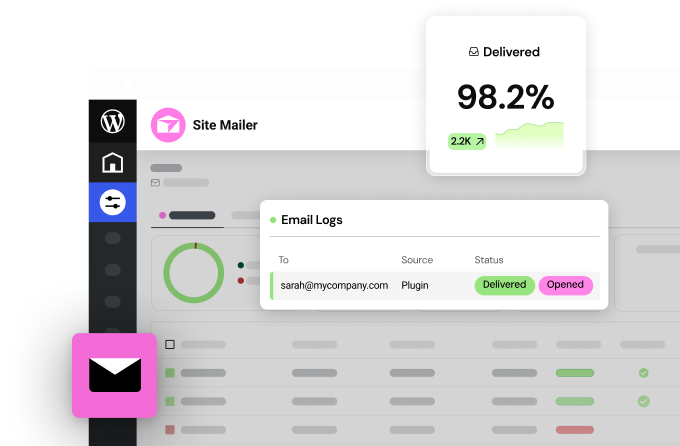
- Site Mailer: One of the hidden struggles of WordPress is email deliverability (contact forms going to spam). Site Mailer by Elementor solves this without complex SMTP setups, ensuring your transactional emails (receipts, password resets) actually reach customers.
The Power of AI
Artificial Intelligence is transforming web creation.
- GoDaddy Airo: GoDaddy’s AI focuses on generation. It will generate a site layout, a logo, and some copy for you. It’s a “do it for me” tool.
- Elementor AI: Elementor’s AI Website Builder solution is a “do it with me” tool, integrated directly into the workflow.
- Text: It can rewrite copy, translate text, or change the tone of a paragraph inside the editor.
- Images: You can generate unique royalty-free images or expand existing images (outpainting) directly on the canvas.
- Code: Perhaps most powerfully, Elementor AI can write custom CSS or HTML snippets for you. If you want a specific hover effect that isn’t in the menu, you can ask the AI to write the code for it. This essentially gives non-coders superpowers that are impossible in a closed builder like GoDaddy. You can also utilize the AI Site Planner to map out your site before you build.
Accessibility and Compliance
Web accessibility (making sites usable for people with disabilities) is becoming a legal requirement in many regions (ADA, EAA).
- GoDaddy: Offers basic accessibility features, but you are limited to their templates.
- Ally by Elementor: Elementor offers a dedicated plugin called Ally. It scans your site for accessibility violations, provides an AI-powered assistant to help fix them, and offers a frontend widget for users to adjust text size and contrast. This level of compliance management is rare in free proprietary builders.
Technical Deep Dive: Why “Section-Based” vs. “Pixel-Perfect” Matters
To understand the frustration many users eventually feel with GoDaddy, we need to talk about the CSS Box Model versus the Section Model.
The GoDaddy Section Model: Imagine a bookshelf. You can place books (content) on the shelves (sections). You can move a shelf up or down. You can pick a shelf that has two dividers or three. But you cannot float a book in mid-air between two shelves. You cannot slant a book at a 45-degree angle.
- Pros: Stability. Hard to break.
- Cons: Homogeneity. Every bookshelf looks like a bookshelf.
The Elementor Visual Model: Elementor uses a visual interface that manipulates the actual CSS of the web.
- Absolute Positioning: You can take an element (like a “Sale” badge) and position it absolutely, so it overlaps the corner of a product image.
- Z-Index: You can stack elements on top of each other (text over video, icon over image).
- Motion Effects: You can set elements to fade in, slide up, or rotate as the user scrolls. Advanced features in Elementor Pro take this even further.
- Shape Dividers: You can make the transition between sections a wave, a cloud, or a jagged mountain, rather than just a straight line.
This difference is why agencies and designers prefer Elementor. It is not just about placing information; it is about crafting an experience.
Frequently Asked Questions
1. Is GoDaddy’s free website builder really free forever? Yes, GoDaddy offers a “Free Website” plan that does not expire. However, it is limited: you cannot use a custom domain name (you must use godaddysites.com), it displays GoDaddy ads, and you cannot accept payments for products.
2. Can I connect my own domain to the free GoDaddy plan? No. To connect a custom domain (like yourbusiness.com), you must upgrade to a paid “Websites + Marketing” plan. This is a common friction point where “free” turns into a monthly subscription.
3. Which is better for SEO: GoDaddy or Elementor? Elementor is generally better for SEO. GoDaddy’s free plan puts you on a subdomain, which is bad for ranking. Even on paid plans, GoDaddy has limited SEO customization. Elementor, running on WordPress, allows you to use powerful SEO plugins, customize permalinks, schema, and technical SEO settings fully. Tools like the Image Optimizer also ensure your site remains fast and search-engine friendly.
4. Can I migrate my GoDaddy website to WordPress later? Not directly. GoDaddy uses a proprietary builder, so there is no “Export to WordPress” button. You would have to manually copy-paste your text and images and rebuild the design from scratch on the new platform. Starting with WordPress/Elementor avoids this “lock-in.”
5. Does Elementor have a free version? Yes. The Elementor Website Builder plugin is free and includes over 40 widgets and full drag-and-drop capabilities. However, you need a WordPress hosting plan to use it.
6. Is Elementor harder to use than GoDaddy? Elementor has a slightly steeper learning curve because it offers more power. GoDaddy is “on rails”—you can’t make mistakes, but you can’t do much. Elementor is a creative tool—you have to learn the interface, but once you do, you have total freedom. Tools like the Hello Biz theme make Elementor much easier for beginners.
7. Can I sell products on GoDaddy’s free plan? You can list products and set up a store, but you cannot accept payments. To actually transact, you need to upgrade to a paid eCommerce plan.
8. What is the difference between Elementor Hosting and just using the plugin? Elementor Hosting is a bundled service that includes managed Google Cloud hosting, the Elementor Pro plugin, and support in one price. Using just the plugin means you have to buy hosting separately from a third party (like Bluehost or SiteGround).
9. Does GoDaddy own my content on the free plan? You retain rights to your text and images, but you do not own the code or the design structure. You are licensing their software. If they discontinue the service or ban your account, your site is gone. With WordPress/Elementor, you own the code and the data.
10. What is the hidden cost of free website builders? The hidden costs include the inability to scale, the damage to brand credibility from using a subdomain/ads, and the “switching cost” of eventually having to rebuild your site from scratch when you outgrow the free tier.
Conclusion
Does GoDaddy have a free website builder? Yes. It is a capable, fast, and accessible tool for those who need to get a simple information page online immediately with zero budget. For a temporary project, a school assignment, or a “placeholder” site, it serves a purpose.
However, for a business intending to grow, the “free” price tag comes with a heavy cost in terms of brand perception and data ownership. The inability to use a custom domain and the lack of portability creates a “walled garden” that can be expensive to escape later.
The alternative—investing in a self-hosted WordPress foundation with Elementor—requires a small financial commitment for hosting, but it delivers a professional asset that you actually own. It offers an ecosystem where your site can evolve from a simple landing page into a complex eCommerce empire without ever having to migrate.
In the digital world, you generally have two choices: you can rent a room in someone else’s hotel, or you can build your own house. GoDaddy’s free plan is the hotel room. Elementor is the blueprint for your own house. Choose the one that matches your ambition.
Citation: Itamar Haim
Looking for fresh content?
By entering your email, you agree to receive Elementor emails, including marketing emails,
and agree to our Terms & Conditions and Privacy Policy.