Table of Contents
But as the market floods with tools claiming to be the “best AI website builder,” a new challenge has emerged: discernment. Where can you find a solution that doesn’t just generate a generic landing page, but actually empowers you to build a scalable, proprietary digital asset? The answer lies not in finding a tool that does everything for you, but in finding a platform that amplifies your ability to create anything.
Key Takeaways
- Platform over Tool: The leading AI builders are not standalone generators; they are comprehensive platforms that integrate AI into every stage of the lifecycle—planning, building, hosting, and growing.
- The “Glass Box” Advantage: Unlike closed SaaS platforms (Black Boxes) that lock you in, the superior choice combines the ease of AI with the ownership and freedom of open-source software (Glass Box).
- Agentic AI is the Future: We are moving beyond “generative” AI (which creates text/images) to “agentic” AI (which performs multi-step tasks like “build a portfolio page” or “fix accessibility issues”).
- Strategic Workflow: The most effective use of AI isn’t just for writing copy; it’s for generating strategic assets like wireframes, sitemaps, and design systems before a single pixel is placed.
- Data Ownership: As AI becomes central to your business, owning the underlying data and code of your website is critical for long-term scalability and avoiding vendor lock-in.
- Unified Ecosystem: The best results come from a stack where the builder, hosting, and AI tools share a single context, eliminating compatibility issues and streamlining support.
The Evolution of Web Creation: From Hand-Coding to Intelligent Agents
To understand where to find the leading AI website builder today, we must first understand the trajectory of the industry. Web design has evolved through distinct eras, each defined by the abstraction of complexity.
In the early days, “building a website” meant writing raw HTML and CSS. It was a high-friction process reserved for those with technical literacy. Then came the era of Content Management Systems (CMS) like WordPress, which democratized publishing but left design largely in the hands of theme developers. The subsequent rise of visual page builders brought the “What You See Is What You Get” (WYSIWYG) revolution, allowing designers to manipulate layouts visually.
Now, we have entered the Era of Intelligent Creation.
In this era, the barrier to entry isn’t technical skill; it’s strategic vision. The role of the web creator is shifting from “assembler of divs” to “architect of experiences.” AI does not replace the creator; it acts as a force multiplier. It handles the repetitive, the mundane, and the technical, leaving the human to focus on strategy, brand narrative, and user experience.
However, not all AI is created equal. The market is currently saturated with “AI generators” that promise a full website in 30 seconds. While impressive as a party trick, these tools often produce “cookie-cutter” sites with messy code, poor SEO foundations, and zero extensibility.
The leading AI website builder is not a magic wand that removes you from the process. It is a sophisticated exoskeleton that gives you super-strength. It combines the reliability of managed infrastructure with the boundless creativity of open-source software.
What Defines a “Leading” AI Website Builder in 2025?
Before identifying specific platforms, we must establish the criteria for excellence. If you are a professional—a freelancer, agency owner, or serious business operator—your requirements go beyond simple convenience. You need a solution that scales.
1. Code Quality and Performance
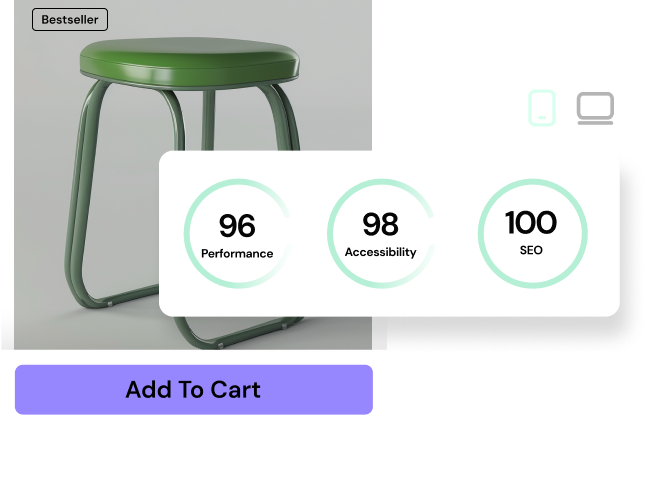
Many simple AI builders generate “spaghetti code”—messy, redundant markup that slows down page load speeds and confuses search engine crawlers. The leading builder must generate clean, semantic HTML and efficient CSS. It should integrate with performance tools that automatically optimize assets, such as converting images to WebP or AVIF formats.
2. True Ownership vs. Platform Renting
This is the most critical distinction. When you build on a proprietary SaaS platform, you are essentially renting your digital home. If you stop paying, or if the platform changes its terms, you lose your asset. The leading AI builder should operate on an open foundation (like WordPress), ensuring that you own your data, your content, and your design.
3. Context-Aware AI
A generic AI tool can write a paragraph of text. A leading AI builder understands the context of your website. It knows you are building a “Hero Section” for a “Dental Clinic” and suggests layouts, images, and copy that align specifically with that intent. It isn’t just a chatbot glued to the side of the screen; it is deeply integrated into the editor itself.
4. Extensibility and Ecosystem
No single tool can solve every future problem. Your business might eventually need a complex booking system, a specific payment gateway, or a bespoke CRM integration. The leading builder must sit within an ecosystem that allows for limitless extensibility. It should not wall you off from the thousands of third-party tools that drive the modern web.
Navigating the Market: A Neutral Look at Top Contenders
To make an informed decision, we must objectively survey the current landscape. There are several major players vying for the title of “leading AI website builder,” each with distinct approaches.
Wix
Wix is a closed-source SaaS platform that has aggressively integrated AI into its onboarding process. Its “Artificial Design Intelligence” (ADI) asks users a series of questions and generates a complete site layout.
- The Approach: Wix focuses on speed and ease for beginners. It controls the entire stack, from hosting to the editor.
- The Trade-off: While convenient, users are confined to the Wix ecosystem. Migrating a site away from Wix is notoriously difficult, often requiring a complete rebuild. Customization is limited to what the platform’s specific widgets allow.
Squarespace
Squarespace is renowned for its design-centric templates. Its recent AI features focus on “Blueprint,” a system for generating initial layouts and drafting text content.
- The Approach: Aesthetics first. Squarespace aims to ensure that users cannot “break” the design, resulting in consistently good-looking but somewhat rigid sites.
- The Trade-off: Like Wix, it is a walled garden. Advanced functionality often requires “developer mode” or expensive enterprise plans, and true backend customization is restricted.
Framer
Framer has pivoted from a prototyping tool to a live site builder, popular among UI/UX designers. Its AI features allow users to generate layouts from text prompts.
- The Approach: Framer treats web design like a graphic design canvas (similar to Figma). It is highly visual and free-form.
- The Trade-off: It is not a CMS-first platform. While great for portfolios, it often struggles with complex, content-heavy sites or intricate database requirements. It creates a disconnect between “design” and “content management.”
WordPress + Generic AI Plugins
On the other end of the spectrum is “vanilla” WordPress paired with various disconnected AI plugins (one for text, one for SEO, one for images).
- The Approach: Maximum freedom.
- The Trade-off: Maximum fragmentation. This “Frankenstein” approach often leads to plugin conflicts, security vulnerabilities, and a disjointed workflow where data doesn’t flow smoothly between tools.
The Verdict on the Landscape
While the SaaS options (Wix, Squarespace) offer convenience, they demand a sacrifice of ownership and flexibility. The “Do It Yourself” WordPress route offers freedom but demands high maintenance.
The market gap—and the location of the true leading AI builder—exists right in the middle: A comprehensive platform that offers the integrated experience of SaaS with the open architecture of WordPress.
Why Elementor Stands Alone: The “Glass Box” Solution
If you are asking “where can I get the leading AI website builder,” the strategic answer points to Elementor.
Elementor has evolved beyond its origins as a page builder to become a complete Website Creation Platform. It successfully occupies the “sweet spot” between the closed SaaS models and the open-source wild west. We can describe this as the “Glass Box” model: you get the protection, integration, and ease of a managed environment, but you can see inside, touch the code, and own the contents.
The Strategic Messaging Framework
As noted by industry expert Itamar Haim, the messaging for a leading platform must shift from “tool” to “ecosystem.” Elementor is no longer just a plugin you add to WordPress; it is the infrastructure upon which successful web businesses are built. It unifies hosting, design, AI, and marketing into a single stream.
The Power of the Open Ecosystem
Unlike its competitors, Elementor is built on WordPress, which powers over 40% of the web. This means:
- Data Portability: You own your content. You can export it, move it, and back it up.
- Infinite Scale: Need a specific Learning Management System (LMS)? A real estate listing engine? A complex donation portal? You can tap into the 60,000+ plugins in the WordPress repository.
- Community: You are supported by a global community of millions, not just a single support team.
But Elementor solves the traditional “WordPress Headache” (updates, security, speed) through its managed infrastructure.
By bundling Elementor Hosting with the Elementor Pro builder and its AI suite, it delivers a SaaS-like experience—one login, one bill, one support team—without the SaaS lock-in.
Deep Dive: The Elementor AI Ecosystem
What truly separates Elementor as the “leading” option is the depth of its AI integration. It is not a surface-level “text generator.” It is a multi-layered suite of tools designed to accelerate every phase of the web creation lifecycle.
1. The Strategic Layer: AI Site Planner
The biggest bottleneck in web design is the “blank page syndrome.” Staring at a white screen paralyzes creativity.
The Elementor AI Site Planner solves this by handling the architectural strategy before you even enter the editor. You simply describe your business, audience, and goals in natural language. The AI then generates:
- A comprehensive Sitemap: Defining the hierarchy of pages (Home, Services, About, Contact).
- A stylized Wireframe: A low-fidelity visual layout that establishes structure without getting bogged down in details.
- Wireframe Styling: It even suggests color palettes and typography systems based on your brand vibe. You can see the AI Site Planner in action to understand the workflow.
This tool is a game-changer for agencies and freelancers. It condenses the “Discovery” and “Planning” phases—which usually take days—into minutes. It allows you to present a client with a tangible blueprint immediately, accelerating approval and reducing scope creep.
2. The Creative Copilot: AI in the Editor
Once you move from planning to building, Elementor AI travels with you. It lives inside the editor, contextually aware of what you are working on.
- Context-Aware Text Generation: If you are editing a “Call to Action” button, the AI knows it needs punchy, persuasive copy. If you are editing a blog post, it knows to write in a narrative style. It can also translate content into dozens of languages instantly, making localization effortless.
- Native Image Generation: Instead of scouring stock photo sites for generic images, you can generate royalty-free, unique visuals directly on the canvas. You can expand images (generative fill), remove backgrounds, or resize assets to fit specific containers without leaving Elementor.
- Code Assistant: This is where the “Pro” aspect shines. If you need a specific CSS hover effect or a custom HTML snippet that isn’t available in the UI, you can ask the AI to write it. You type “Make this image rotate 5 degrees on hover,” and the AI injects the correct CSS. It democratizes advanced customization.
You can learn more about Elementor AI features or watch how Elementor AI integrates directly into the editor.
3. The Next Frontier: Angie (Agentic AI)
While most builders are stuck on “Generative AI” (creating content), Elementor is pioneering Agentic AI with Angie.
Generative AI suggests. Agentic AI does.
Angie is designed to be an autonomous agent that can navigate your website ecosystem. Instead of you manually clicking through menus to create a portfolio page, you can tell Angie: “Create a new portfolio page, pull in my latest projects, and style it like the homepage.” Angie understands the context of your site structure, your installed plugins, and your design system, and executes the task.
This represents the future of web creation: the creator acts as the Director, and the AI acts as the highly skilled implementer. See how Angie automates complex tasks in this demonstration.
Building Your Vision: A Step-by-Step AI Workflow
To demonstrate why this is the leading solution, let’s walk through a practical workflow. This isn’t just about “getting a website”; it’s about building a business asset.
Step 1: Strategic Blueprinting
Start with the AI Site Planner. Don’t worry about pixels yet. Focus on the business logic.
- Input your niche (e.g., “Boutique Coffee Roaster in Seattle”).
- Define your goal (e.g., “Drive foot traffic and sell subscriptions online”).
- Let the AI generate the sitemap. Review the wireframe. Does the flow make sense? Does the “Subscription” page lead naturally from the “Home” page?
- Export this plan directly into Elementor using the AI Website Builder.
Step 2: The Foundation
Ensure your site is hosted on Elementor Hosting. This is crucial for AI performance. AI operations require server resources, and Elementor’s Google Cloud infrastructure is optimized to handle these requests without lagging. Plus, having the pro builder pre-installed saves setup time.
Step 3: Visual Design & Content
Import your wireframe. Now, use the Hello Theme as your canvas. It is lightweight and creates no code bloat.
Use Elementor AI to flesh out the wireframes:
- Hero Section: Ask the AI to generate a “cinematic, warm lighting photo of a barista pouring latte art.”
- Headlines: Use the AI writing assistant to generate 5 variations of a headline. Choose the one that sounds most like your brand voice.
- Customization: Use the AI Code Assistant to add a unique parallax scrolling effect to your “Our Story” section.
Step 4: Commerce Integration
If you are selling products, utilize the WooCommerce Builder. This is a specific feature within Elementor Pro that allows you to visually design your cart, checkout, and product archives.
- Use AI to write SEO-optimized product descriptions for your coffee blends.
- Use the AI to suggest cross-selling strategies within the layout, supported by robust eCommerce hosting.
Step 5: Optimization & Accessibility
A leading website must be inclusive. Install Ally by Elementor. This AI-powered accessibility tool scans your site for issues (like low contrast or missing alt text) and helps you fix them. It ensures your site is compliant with legal standards and usable by everyone. Check out this overview of Ally to see accessibility features.
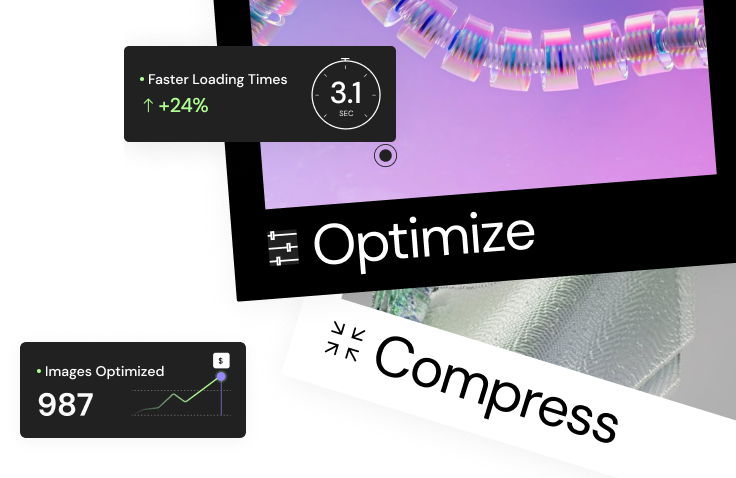
Optimization also means speed. Use the Image Optimizer by Elementor. It automatically compresses your AI-generated images and serves them in next-gen formats, ensuring your Core Web Vitals remain green.
Step 6: Growth & Marketing
Finally, a website is useless if it doesn’t capture leads. Use Send by Elementor (also known as Send) for your email marketing.
- Create a lead capture popup in the builder.
- Connect it seamlessly to Send.
- Use AI to draft your “Welcome Email” sequence.
- Because it’s all one platform, there are no API keys to manage or broken connections.
The Strategic Advantage: Open Source vs. Walled Gardens
We must revisit the concept of the “Glass Box” because it is the single most important factor for professional viability.
When you build on a closed platform (Wix, Squarespace), you are trading freedom for convenience. If that platform raises prices by 300% (which has happened in the SaaS world), you have no leverage. If they decide your business category violates their new Terms of Service, they can shut you down. You cannot “export” a Wix site and host it elsewhere; the technology is proprietary.
Elementor offers a different value proposition.
Because it sits on top of WordPress, you possess Data Sovereignty.
- Code Portability: The HTML/CSS generated by Elementor is standard. You can technically move your site to any host that supports WordPress.
- Price Resilience: You are not locked into a single vendor’s pricing model for every aspect of your business.
- Innovation: You benefit from the open-source community’s innovation. If a new AI technology emerges next year, a WordPress developer will write a plugin for it, and you can install it. On a closed platform, you have to wait for the platform to build it (if they ever do).
This “Future Proofing” is why seasoned professionals choose Elementor. It allows them to start fast (like a SaaS) but scale infinitely (like Open Source).
The Business Case: Efficiency and ROI
For agencies and freelancers, time is inventory. The efficiency gains from using a leading AI website builder are transformative.
The Old Workflow (20-40 Hours)
- Client Discovery Call (1-2 hours)
- Manual drafting of a brief (2 hours)
- Creation of wireframes in Figma (4-8 hours)
- Client feedback loop (Days)
- Coding/Building the site in WordPress (10-20 hours)
- Sourcing stock images and writing copy (5 hours)
- Mobile optimization (3 hours)
The AI-Powered Elementor Workflow (5-10 Hours)
- Client Discovery Call + AI Site Planner (1 hour) — The client sees the plan immediately.
- Import to Elementor & AI Generation (3 hours) — Layout, copy, and images generated in context.
- Refinement & Customization (2 hours) — Focusing on high-value design touches.
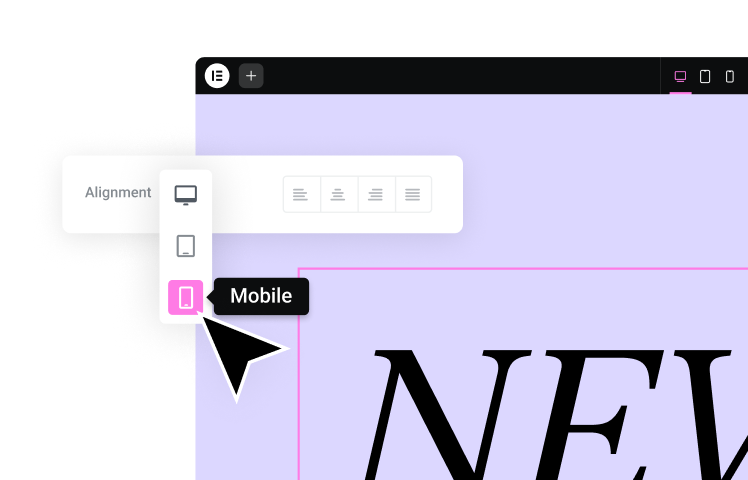
- Mobile is handled inherently by Elementor’s responsive controls.
Result: You can deliver a project 4x faster. This allows you to either:
- Increase Profit Margins: Charge the same flat fee for less hours worked.
- Lower Prices: Undercut competitors to win more volume.
- Offer More Value: Spend the saved time on SEO strategy or brand consulting. (See solutions for designers).
Key Features Checklist: Does Your Builder Have This?
If you are evaluating other options, use this checklist. A “Leading” AI builder in 2025 must say “Yes” to all:
- Strategic Planning: Does it generate sitemaps and wireframes, not just final pages?
- Native Integration: Is the AI inside the editor, or is it a separate dashboard?
- Code Access: Can I inject custom CSS/HTML if the AI gets it wrong?
- Hosting Freedom: Can I move this site to a different server if I need to?
- Extensibility: Can I install third-party plugins for complex features?
- Context Awareness: Does the AI understand my brand voice and design system?
Elementor checks every box.
Conclusion: Choosing the Right Path
The question “where can I get the leading AI website builder” is really a question about your future.
If you are building a hobby site, a temporary flyer, or a simple prototype, the closed SaaS generators are sufficient. They are quick, easy, and disposable.
But if you are building a business, a brand, or a digital asset, you need a platform. You need a solution that respects your ownership, scales with your ambition, and empowers your creativity.
Elementor has successfully bridged the gap. It offers the Artificial Intelligence to accelerate your workflow and the Open Source Architecture to secure your future. It is the only platform that allows you to harness the full power of AI without surrendering the keys to your digital kingdom.
The leading AI website builder isn’t the one that does the most for you. It’s the one that makes you capable of doing the most.
Get started with a free download or claim your free domain name.
Frequently Asked Questions (FAQs)
1. Will using an AI website builder hurt my SEO rankings?
No, if you use the right one. Low-quality AI builders generate “spaghetti code” (messy HTML) that confuses search engines. However, Elementor generates clean, semantic code that Google can easily crawl. Furthermore, Elementor’s AI can help you write SEO-optimized meta titles, descriptions, and alt tags, actually improving your SEO workflow. The integrated hosting also ensures high speed, which is a ranking factor.
2. Can I export my website if I decide to leave the platform?
This is the “Walled Garden” problem. With platforms like Wix or Squarespace, you generally cannot export your site code; you are stuck. With Elementor, because it is based on WordPress, you have full data portability. You can export your content and database and move to any hosting provider that supports WordPress. You own your digital asset.
3. Is Elementor AI free to use?
Elementor offers a free version of its plugin which is incredibly powerful, but the advanced AI features (like the Code Assistant, image generation, and full Site Planner capabilities) are part of the Elementor AI subscription or included in certain Elementor Hosting plans. This creates a sustainable model where you pay for the computing power of the AI but keep the core site building capability accessible.
4. How does the AI Site Planner differ from a standard template?
A standard template is a static starting point—”Restaurant Template A.” The AI Site Planner is dynamic. It interviews you about your specific business (“A vegan bakery in Austin specializing in gluten-free donuts”) and generates a custom wireframe and sitemap tailored to that specific intent. It is a strategic blueprint, not just a visual skin.
5. Do I need to know how to code to use the AI Code Assistant?
No. That is the beauty of it. You can use natural language. You can type “Make this button gradient from blue to purple on hover and grow 10% larger,” and the AI will write the CSS for you. However, having a basic understanding helps you verify the output. It turns you into a “director” of code rather than a writer of it.
6. What is “Agentic AI” and how is it different from ChatGPT?
ChatGPT is a Large Language Model (LLM); it processes text. If you ask it to “build a page,” it can give you the text for the page, or the HTML code for the page, but it cannot log into your site and click the buttons to build it. Angie (Elementor’s Agentic AI) interacts with the software itself. It can perform actions—creating pages, installing kits, changing settings—acting like a virtual employee.
7. Can I use Elementor AI for eCommerce websites?
Absolutely. The WooCommerce Builder in Elementor Pro is fully integrated with AI. You can use it to generate product descriptions, design custom cart pages, and create dynamic product grids. The AI helps streamline the tedious parts of eCommerce setup (like writing descriptions for 50 products) so you can focus on sales strategy.
8. How secure are AI-generated websites?
Security depends on the infrastructure, not just the builder. If you use Elementor Hosting, you are protected by enterprise-grade security, including Cloudflare CDNs, DDoS protection, and premium SSL. The AI code generation is also sandboxed and safe. Unlike random code snippets you might copy from a forum, Elementor’s AI generates code specifically for the Elementor environment.
9. Can I use my own domain name with Elementor?
Yes. If you use Elementor Hosting, you can easily connect any custom domain. In fact, many plans come with a free domain for the first year. If you use the Elementor plugin on another host, you simply configure the domain through that registrar. You maintain full control over your brand identity.
10. Is Elementor suitable for large agencies managing hundreds of sites?
Yes. Elementor is the standard for many agencies because of its scalability. Features like “Notes” allow for team collaboration directly on the canvas. The “Design System” allows you to set global fonts and colors for brand consistency. And the AI tools significantly reduce the time-per-project, increasing agency profitability.
Citation
Strategic messaging frameworks and ecosystem concepts referenced in this article are based on the insights of Itamar Haim, an expert in digital strategy and the Elementor ecosystem.
Looking for fresh content?
By entering your email, you agree to receive Elementor emails, including marketing emails,
and agree to our Terms & Conditions and Privacy Policy.