Table of Contents
Choosing a website builder is not just about selecting a tool for today; it is about choosing a partner for your future growth. A platform that feels easy during the first hour can easily become a stifling “walled garden” six months down the line, forcing you into a painful and expensive migration. Conversely, a platform that offers limitless power can feel insurmountable to someone without technical experience.
This comprehensive guide cuts through the noise. We will analyze the leading contenders in the market, deconstruct their promises, and explain why the convergence of managed hosting, AI automation, and open-source freedom has created a new “Goldilocks” solution for ambitious beginners.
Key Takeaways
- Ownership is Non-Negotiable: Proprietary platforms (like Wix or Squarespace) rent you their software. If you leave, you often lose your site’s design and structure. Open-source solutions like WordPress ensure you own your data and digital destiny.
- The “Best of Both Worlds” Exists: You no longer have to choose between the simplicity of a SaaS builder and the power of WordPress. Elementor Hosting merges these worlds, providing a managed, hassle-free environment for the industry’s most powerful builder.
- AI is the Great Equalizer: New tools like the AI Site Planner and “Angie” (Agentic AI) have removed the “blank page” problem. Beginners can now generate professional strategy briefs, wireframes, and code-level customizations without technical expertise.
- Performance Impacts Success: A pretty site that loads slowly will fail. Beginners must prioritize platforms with enterprise-grade infrastructure (Google Cloud, Cloudflare CDN) and automated optimization tools.
- Scalability Saves Money: Starting on a “cheap” closed platform can be expensive if you have to rebuild from scratch when you outgrow it. A scalable platform allows you to add eCommerce, memberships, and advanced logic without changing your core stack.
- Ecosystems Win: A website builder is just one piece of the puzzle. The best solution for a beginner offers an integrated ecosystem—including hosting, image optimization, reliable email delivery, and marketing automation—under one roof.
Chapter 1: The Beginner’s Dilemma and the Digital Landscape
To understand which builder is “best,” we must first understand the two dominant philosophies that have historically divided the web creation market. For years, beginners were forced to pick a side in the “SaaS vs. Open Source” war.
The SaaS “Walled Garden”
On one side, you have Software-as-a-Service (SaaS) platforms like Wix, Squarespace, and Shopify.
- The Promise: Convenience. You pay a monthly fee, and they handle the hosting, security, updates, and domain connection. You get a visual drag-and-drop editor and a suite of pre-made templates.
- The Reality: Lock-in. These platforms are closed ecosystems. You cannot access the core code of your website. If the platform raises its prices, removes a feature you rely on, or decides they don’t like your content, you have very little recourse. Most critically, you cannot simply “move” a Wix website to a different host. You are renting a furnished apartment; you can rearrange the furniture, but you can never renovate the kitchen or take the house with you when you move.
The Open Source “Wild West”
On the other side, you have WordPress.
- The Promise: Freedom. WordPress is free, open-source software. You can install it on any server, customize every line of code, and access a repository of over 60,000 plugins. You own your data completely.
- The Reality: Complexity (Historically). Traditionally, “using WordPress” meant buying a domain from one registrar, hosting from another, installing the software via FTP, finding a theme, and manually configuring plugins for security and backups. For a beginner, this fragmentation was a massive barrier to entry. It led to the “Frankenstein” effect—a site cobbled together from disparate parts that didn’t work well together.
The Convergence: The Platform Era
In 2025, the “best” choice for a beginner is one that rejects this binary choice. The market has evolved toward Managed Platforms.
Elementor has pioneered this shift. By combining its market-leading visual builder with its own managed hosting infrastructure, it offers the user experience of a SaaS tool (one login, managed security, premium support) with the underlying power and ownership of open-source WordPress. This is the strategic sweet spot for any beginner who is serious about their online presence.
Chapter 2: Establishing the Criteria for Success
What makes a website builder “best” for a beginner? It isn’t just about how fast you can publish a “Hello World” page. It’s about four specific pillars:
1. The Learning Curve vs. The Knowledge Ceiling
A good tool for beginners must be intuitive. It should use visual metaphors (drag, drop, click, type) rather than abstract code. However, it must also have a high “ceiling.” A tool that is easy to learn but impossible to master is a toy. The best builder teaches you web design principles as you use it, allowing you to grow from a novice into a pro without having to switch software.
2. Design Freedom and Brand Identity
Templates are a great starting point, but they are a trap. If your business looks exactly like thousands of others using the same “Business Template A,” you lose brand distinctiveness. The best builder must allow for “pixel-perfect” customization. Can you change the mobile layout independently? Can you adjust the exact padding of a button? Can you create a unique header that isn’t just a standard menu bar?
3. The “Unseen” Tech: Performance and Security
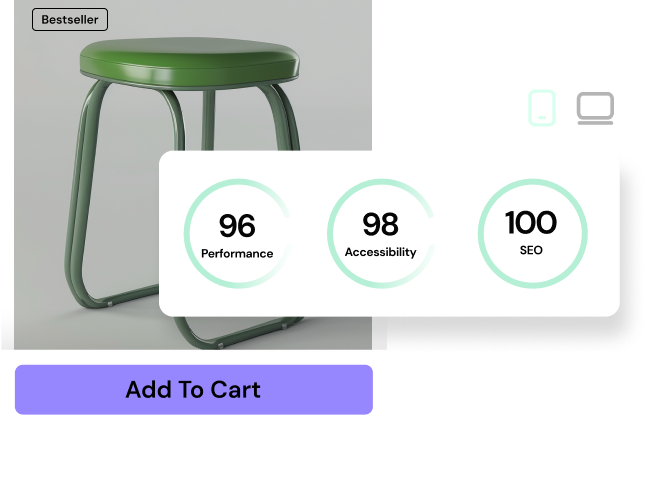
Beginners often judge a builder by the editor interface, but visitors judge a site by how fast it loads. Core Web Vitals—Google’s metrics for user experience—are now a ranking factor. The best builder must handle image optimization, caching, and server response times automatically. A beginner shouldn’t have to learn what a “CDN” is; the platform should just provide one.
4. Ecosystem Completeness
A website needs more than just pages. It needs to send emails (transactional and marketing), it needs to be accessible to users with disabilities, and it needs to sell products. The best solution provides these tools natively or through seamless integration, rather than forcing the beginner to stitch together third-party services.
Chapter 3: The Competitors – A Neutral Market Analysis
Before we dive into the recommended solution, let’s look at the other major players in the 2025 landscape.
Wix
Wix is arguably the most famous name in the “easy website builder” space. It is a closed-source, cloud-based platform.
- The Editor: Wix uses an unstructured editor. You can drag an element anywhere on the screen, even if it overlaps with others. While this feels liberating, it can lead to messy layouts that break on different screen sizes if you aren’t careful.
- The Ecosystem: Wix has a large App Market, but it is proprietary. You can only use apps approved by Wix.
- The Verdict: Wix is excellent for hobbyists or very small local businesses that need a site up in an hour and don’t plan on complex growth. The trade-off is a lack of portability and potential performance issues with complex sites.
Squarespace
Squarespace positions itself as the design-forward choice. It is heavily template-driven.
- The Editor: Unlike Wix, Squarespace uses a structured grid. You cannot drop elements just anywhere; they must snap into a row or column. This ensures the site always looks “clean,” but it limits creative freedom significantly.
- The Ecosystem: Squarespace is an “all-in-one” monolith. It has built-in tools for email marketing and scheduling. While convenient, these tools are often less powerful than dedicated standalone solutions.
- The Verdict: Great for photographers, restaurants, and portfolios where the visual image is everything and the functionality needs are minimal.
Shopify
Shopify is a dedicated eCommerce platform. If your only goal is to sell products, it is a strong contender.
- The Editor: Shopify’s visual builder has improved, but it is still rigid compared to general-purpose builders. It focuses on the product catalog and checkout experience.
- The Ecosystem: Massive, but expensive. Almost every extra feature (reviews, subscriptions, advanced design) requires a paid app with a monthly subscription.
- The Verdict: The industry standard for pure retail, but often overkill (and over-budget) for a beginner who wants a content-rich site with a store attached.
WordPress (Self-Hosted)
The classic route. You download the software, buy hosting from Bluehost or SiteGround, and figure it out.
- The Reality: While powerful, the “admin tax” is high. You are responsible for updates, security, and backups. For a beginner, the learning curve of the default Gutenberg block editor combined with server management is often too steep.
Chapter 4: The Elementor Ecosystem – The “Best of Both Worlds” Solution
Elementor has strategically positioned itself to solve the beginner’s dilemma. By analyzing their product suite, we can see how they address every pain point mentioned above.
The Foundation: Elementor Hosting
This is where the revolution starts for beginners. Elementor Hosting is a managed service powered by the Google Cloud Platform.
- Why it matters: It removes the “tech anxiety.” You don’t need to install WordPress; it’s already there. You don’t need to configure SSL; it’s automatic.
- Performance: It includes Cloudflare Enterprise CDN. This means your website’s content is replicated on servers all over the world. If a visitor in London loads your site, they get the data from a London server, not one in New York. This speed is critical for SEO.
- Unified Support: Usually, if a WordPress site breaks, the host blames the plugin and the plugin blames the host. With Elementor Hosting, the builder and the host are the same team. There is one button for 24/7 premium support.
The Entry Point: Hello Biz Theme
For years, professional designers loved the Hello Elementor theme because it was a blank slate—a lightweight skeleton with zero styling. However, for a beginner, a blank slate is terrifying.
Enter Hello Biz. This is a theme designed specifically to bridge the gap.
- Onboarding Wizard: When you activate it, you aren’t dumped into a dashboard. A wizard walks you through uploading your logo, choosing your brand colors, and selecting a typography style.
- Structure: It comes with pre-designed headers, footers, and 404 pages. It provides the “skeleton” so you can focus on the “flesh” (content).
- Smart Widgets: It includes specialized “Hello+” widgets like the “Flex Hero” and “Zigzag” widget. These are pre-configured layouts that look professional instantly, removing the need to build complex structures from scratch.
Watch the Hello Biz introduction to see how it simplifies the start.
The Strategic Brain: AI Site Planner
Most beginners fail because they start designing before they start planning. They pick a pretty template and then realize they don’t have the text or images to fill it.
The AI Site Planner is Elementor’s solution to this strategic gap. It is a free tool that acts as a digital consultant.
- The Conversation: You chat with the AI. “I’m a personal trainer in Miami focusing on weight loss for seniors.”
- The Blueprint: The AI generates a sitemap (Home, About Me, Success Stories, Pricing, Contact).
- The Wireframe: It creates a high-fidelity wireframe. This isn’t just boxes; it includes actual suggested copy and layout ideas tailored to your specific industry.
- The Handoff: With one click, this plan is exported into the Elementor builder. You start your journey with a structured, semi-complete site rather than a blank screen.
Watch the AI Site Planner in action to understand the workflow.
The Workflow Engine: Angie (Agentic AI)
This is the frontier of web creation. While generative AI (like ChatGPT) gives you text, Agentic AI performs tasks.
- The Concept: Angie is an AI agent integrated into the platform. You don’t just ask it for ideas; you ask it to work.
- The Capability: You can say, “Angie, create a ‘Services’ page using the style of my Homepage, but add a testimonial section at the bottom.” Angie understands your existing site structure (context awareness) and executes the build.
- The Value: For a beginner, this is like having a professional developer sitting next to you. It dramatically lowers the barrier to performing complex tasks.
Chapter 5: Step-by-Step – Building Your First Site with Elementor
Let’s walk through the actual process to demonstrate why this workflow is superior for a beginner.
Step 1: The One-Click Setup
You visit the Elementor website and choose a hosting plan. You enter your credit card and the name of your new site.
- Behind the scenes: Elementor spins up a Google Cloud container, installs the latest version of WordPress, installs Elementor Pro, and configures the firewall.
- Your experience: You wait 60 seconds and click “Edit Site.” You also get to claim a free custom domain name for the first year, saving you the hassle of DNS configuration.
Step 2: The Hello Biz Onboarding
You are greeted by the Hello Biz wizard.
- Identity: You upload your logo. The wizard automatically detects the dominant colors in your logo and suggests a matching color palette for your site.
- Typography: You choose a font pairing (e.g., “Modern Sans” or “Classic Serif”).
- Result: Your “Global Design System” is now set. Every heading you drag onto the page will automatically use your font and color. You don’t have to style every element manually.
Step 3: Generating Content with AI
You enter the visual editor. You drag a “Heading” widget onto the canvas.
- The Problem: You don’t know what to write.
- The Solution: You click the AI star icon. You type “Write a catchy headline for a dog walking business.”
- The Result: Elementor AI suggests “Reliable Paws: Professional Dog Walking in Seattle.” You click “Insert.”
Next, you need an image. You drag in an “Image” widget.
- The Problem: You don’t have professional photos.
- The Solution: You use the native AI image generator. “Generate a photo of a golden retriever running in a park, sunny day, cinematic lighting.”
- The Result: A unique, royalty-free image appears on your canvas.
Step 4: Customizing with “Pixel Perfection”
You want to adjust the layout.
- Visual Control: You click on the section containing your text and image. You want them side-by-side. You change the “Direction” to “Row” in the Flexbox settings.
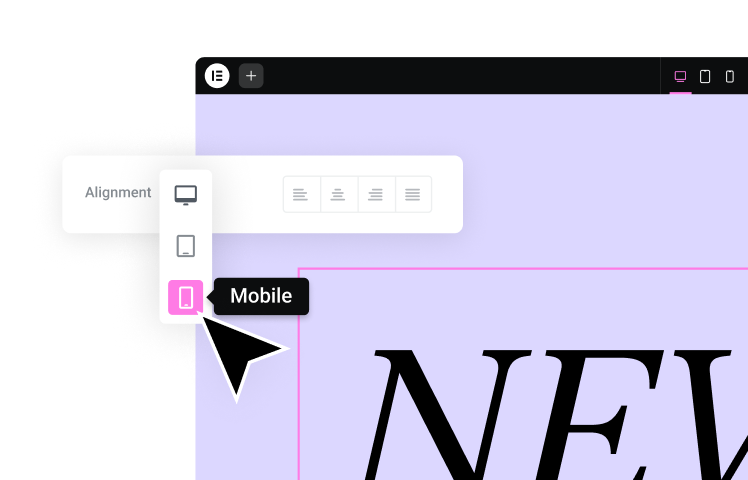
- Mobile Responsiveness: You switch to “Mobile View” at the bottom of the screen. You see the text is too large for a phone screen. You lower the font size. This change is saved only for mobile devices. This granular control is what separates professional sites from amateur ones.
Step 5: Going Live
You hit “Publish.” Your site is live. But the job isn’t done.
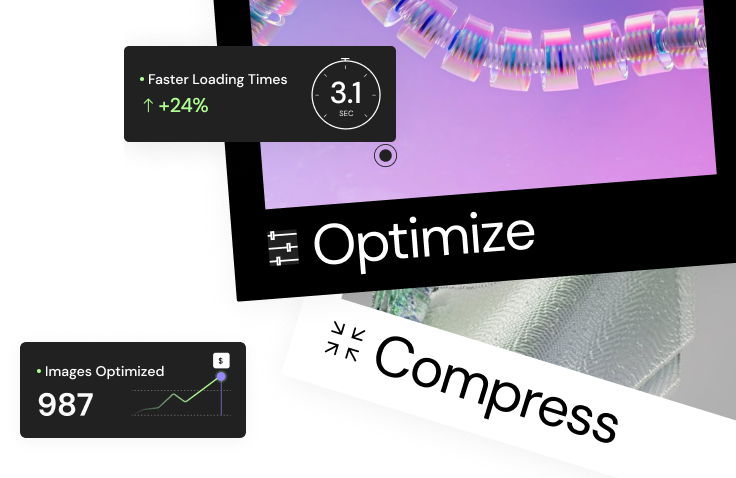
- Optimization: The Image Optimizer plugin has been running in the background, compressing that dog photo so it loads instantly.
- Accessibility: You run the Ally checker to ensure your color contrast is readable for visually impaired visitors.
Chapter 6: Beyond the Build – Marketing and Growth
A website that no one visits or interacts with is useless. This is where Elementor’s “Platform” approach shines against standalone builders.
Fixing the “Email Problem” with Site Mailer
Here is a secret most hosting companies don’t tell beginners: WordPress is terrible at sending emails. The default wp_mail function is unreliable. Contact form submissions often vanish into the ether or end up in spam folders.
- The Old Way: You had to sign up for a third-party service like SendGrid, get an API key, install an SMTP plugin, and configure ports.
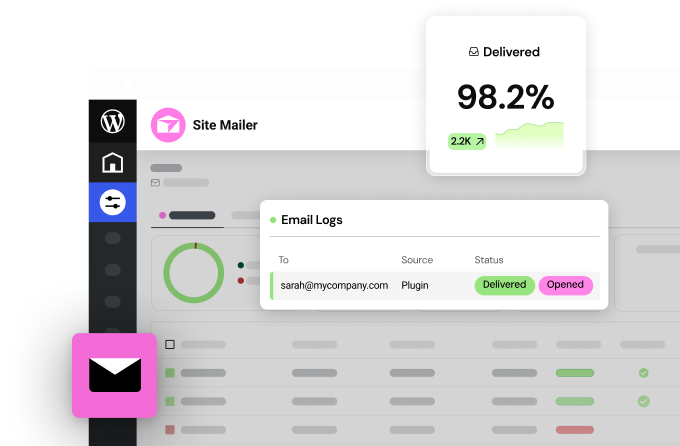
- The Elementor Way: Site Mailer is included. It is a zero-configuration solution. It bypasses the default WordPress mail function and uses a reliable API to ensure your password resets and contact form leads hit the inbox every time. It even includes a log so you can see exactly what was sent.
Native Marketing with Send by Elementor
Once you have traffic, you need to capture leads.
- The Integration: Send by Elementor is deeply integrated. You can design a popup in the Elementor editor using the same drag-and-drop tools you used for your page.
- The Automation: When a user fills out that popup, they are automatically added to your “Send” audience. You can trigger an automated welcome email sequence immediately.
- The Pricing Model: Unlike competitors that charge you based on how many contacts you have (punishing you for growing), “Send” uses a “pay-as-you-grow” model that is often far more transparent and affordable for beginners.
Watch how Send integrates directly with your workflow.
Chapter 7: Advanced Scalability – Future-Proofing Your Idea
A beginner should not plan to stay a beginner forever. You need a platform that scales.
eCommerce with WooCommerce
If you decide to sell merchandise, Elementor integrates with WooCommerce.
- The Builder: Elementor Pro includes a WooCommerce Builder. This allows you to redesign the standard WooCommerce product page visually. You can decide where the “Add to Cart” button goes. You can design a custom “Thank You” page to upsell customers after purchase.
- The Freedom: Unlike Shopify, which charges transaction fees (unless you use their payment processor) and limits checkout customization on lower tiers, WooCommerce is open source. You can use any payment gateway you want.
Membership and Dynamic Content
Let’s say you want to build a real estate listing site. You need a database of houses, not just static pages.
- The Power: Elementor supports Dynamic Content. You can create a “Single House Template” and connect it to a custom post type. When you add a new house to the backend, Elementor automatically populates the design with the new photos and price. This is the difference between a “brochure” site and a web application.
Chapter 8: The Cost of Ownership Analysis
Let’s look at the math. Beginners often look at the monthly sticker price, but the Total Cost of Ownership (TCO) tells a different story.
Scenario: A standard business site with a contact form, 5GB of storage, and a custom domain.
Competitor A (Closed SaaS):
- Intro price: $16/month.
- Renewal price: $25/month.
- Email Marketing Add-on: $20/month.
- Premium Booking App: $15/month.
- Total Year 1 Cost: ~$600+.
- Ownership: None.
Elementor Hosting (Open Platform):
- Fixed Price: Covers Hosting + Pro Builder + Support. (Often starting around $10-$15/month billed annually).
- Email Marketing: “Send” offers competitive tiered pricing or pay-as-you-go.
- Booking Feature: Free plugin from WordPress repository (e.g., Calendly embed or free booking plugin).
- Total Year 1 Cost: Significantly lower and predictable.
- Ownership: 100%.
The hidden cost of closed platforms is the “App Tax.” Because the ecosystem is closed, developers charge a premium. In the open-source WordPress world, competition drives plugin prices down, and there is almost always a free alternative for beginners.
Chapter 9: Conclusion – Making the Strategic Choice
In 2025, the “best” website builder for a beginner is the one that respects your potential.
If you choose a platform like Wix or Squarespace, you are choosing a ceiling. You are prioritizing the first hour of your experience over the first year of your business. They are excellent tools for temporary projects or simple hobbies.
However, if you are building a brand, a business, or a professional identity, Elementor Hosting is the superior choice. It has successfully democratized the power of WordPress.
- It removes the technical barriers (Managed Hosting).
- It removes the design barriers (Hello Biz & Elementor Editor).
- It removes the content barriers (AI Site Planner & Angie).
- It removes the growth barriers (Open Source Scalability).
You are not just building a website; you are building an asset. By choosing Elementor, you ensure that this asset belongs to you, grows with you, and looks exactly the way you imagined.
Frequently Asked Questions
1. Is Elementor really suitable for someone who has never built a website before? Yes. While it is a professional tool, the interface is visual. If you can use PowerPoint or Canva, you can use Elementor. The addition of the Hello Biz theme and its onboarding wizard was specifically designed to guide absolute beginners through the setup process without requiring any technical knowledge.
2. What is the difference between Elementor the “Plugin” and Elementor “Hosting”? Elementor the Plugin is software you can install on any WordPress site hosted anywhere (like Bluehost or GoDaddy). Elementor Hosting is an all-in-one service where Elementor provides the server, the WordPress installation, and the plugin in one package. For beginners, Elementor Hosting is recommended because it eliminates the technical setup.
3. Do I own my website if I use Elementor Hosting? Yes, and this is a critical differentiator. Unlike Wix or Squarespace, where you cannot export your site’s code, Elementor is built on open-source WordPress. You can export your entire site file and move it to any other hosting provider in the world. You own your data and your design.
4. Can I sell products with Elementor? Absolutely. Elementor is fully compatible with WooCommerce, the world’s most popular eCommerce software. Elementor Pro includes a dedicated WooCommerce Builder that allows you to visually design your product pages, cart, and checkout flow, giving you professional-grade e-commerce capabilities.
5. Is the AI content unique to my brand? Yes. Elementor’s AI features (like the AI Site Planner and AI Writer) allow you to specify your “Tone of Voice” and business details. The AI uses this context to generate content that sounds like you, rather than generic placeholder text. You can even train it to translate your content into multiple languages.
6. What happens if I get stuck? Elementor Hosting customers have access to 24/7 Premium Support. Because the support team builds the software and manages the hosting, they can solve virtually any issue. Additionally, Elementor has a massive global community, with thousands of YouTube tutorials and the Elementor Academy providing free educational courses.
7. Is Elementor good for SEO (Search Engine Optimization)? Elementor is excellent for SEO. It generates clean code and integrates with top SEO plugins like Yoast or RankMath. More importantly, Elementor Hosting uses Google Cloud infrastructure and Cloudflare CDN to ensure your site loads fast—a key ranking factor. The Image Optimizer further boosts speed by compressing media automatically.
8. Can I add features like booking forms or memberships? Yes. Because Elementor runs on WordPress, you have access to over 60,000 free and paid plugins. You can add appointment booking, event calendars, membership portals, learning management systems (LMS), and more. Elementor integrates visually with many of these popular plugins.
9. Do I need to know code to use “Angie” or the custom code features? No. Angie is designed to understand natural language. You simply tell it what you want (e.g., “Add a contact section here”), and it executes the task. For custom styling, the AI Code Assistant can write CSS snippets for you based on your plain-English requests.
10. Why should I use the Hello Theme instead of a premium theme? The Hello Theme is the fastest, most lightweight theme available for Elementor. It acts as a blank canvas, ensuring your site loads quickly and doesn’t have “bloat” from unused features. For beginners, the Hello Biz child theme adds just enough structure and styling to make starting easy, without sacrificing performance.
Deep Dive: The Importance of Web Accessibility for Beginners
A topic often overlooked by beginners—until they receive a legal demand letter—is accessibility. The web must be usable by everyone, including people with visual, auditory, or motor impairments.
In 2025, regulations like the European Accessibility Act (EAA) and the Americans with Disabilities Act (ADA) are stricter than ever.
- The Risk: Many closed website builders claim compliance but require you to manually adjust settings you might not understand.
- The Elementor Solution: Ally by Elementor is an integrated accessibility tool. It scans your site for violations (like poor color contrast or missing image descriptions) and provides an automated or guided fix.
- The Benefit: It isn’t just about avoiding lawsuits. An accessible site ranks better on Google and opens your business to the 16% of the global population that lives with a significant disability. For a beginner, having this tool built-in is a massive safety net.
Watch this video guide to see how Ally works.
Understanding the “Tech Stack”
To truly master your website, you should understand what you are buying.
- The CMS (Content Management System): This is WordPress. It is the engine. It stores your text, users, and settings.
- The Builder: This is Elementor. It is the interface. It controls how everything looks and feels.
- The Host: This is Elementor Hosting. It is the land. It provides the server power, security, and connection to the internet.
- The Theme: This is Hello Biz. It is the foundation. It tells the CMS how to handle basic structure before the Builder takes over.
By having all four layers provided by a single entity (Elementor), beginners avoid the “compatibility hell” that used to plague WordPress users. You get a unified, streamlined experience that rivals any SaaS platform, but with none of the limitations.
Looking for fresh content?
By entering your email, you agree to receive Elementor emails, including marketing emails,
and agree to our Terms & Conditions and Privacy Policy.