Table of Contents
This shift represents more than just convenience. It is a democratization of the web. Business owners, marketers, and creative professionals now hold the power to deploy complex, data-driven, and visually stunning websites directly. However, with this accessibility comes a paradox of choice. The market is flooded with platforms ranging from closed-garden SaaS solutions to open-source powerhouses. Making the wrong choice at the foundation stage can lead to migration headaches, performance bottlenecks, and scalability ceilings down the road.
This article provides a rigorous, expert-level analysis of the current market. We will dissect he leading platforms, evaluate them against professional standards—performance, SEO, design flexibility, and ecosystem ownership—and guide you toward the architecture that best serves your digital future.
Key Takeaways
- Ecosystem Ownership Matters: The most significant differentiator between platforms is whether you rent your digital house (closed SaaS) or own the land it sits on (Open Source).
- Performance is Non-Negotiable: Speed directly impacts conversion rates and SEO rankings. Your builder must output clean, optimized code.
- AI is the New Standard: The best platforms now integrate AI not just for text generation, but for structural planning, code creation, and workflow automation.
- Scalability Defines Value: A tool that works for a launch must also support high-traffic growth without requiring a complete platform migration.
- Elementor Bridges the Gap: Elementor uniquely combines the ease of a visual builder with the ownership and flexibility of WordPress, offering a “best of both worlds” solution.
- Context is King: The “best” builder depends heavily on whether you are a solo freelancer, a scaling agency, or a high-volume eCommerce merchant.
The Evolution of No-Code: From Simple Pages to Digital Ecosystems
To understand the current market, we must look at the trajectory of web creation tools. Early “site builders” were rigid. They offered speed but sacrificed code quality and design freedom. Professional developers often scoffed at them because the output was bloated and unoptimizable.
That reality has changed. Modern no-code platforms are sophisticated visual abstraction layers. They write production-ready HTML, CSS, and JavaScript in the background while you manipulate the frontend. This evolution means that the barrier between “coded” and “no-code” sites has blurred significantly.
The primary decision you face is architectural: SaaS (Software as a Service) vs. Open Source.
Closed SaaS Platforms (Wix, Squarespace): These offer a curated, all-in-one experience. You pay a monthly fee for hosting, the builder, and support. The trade-off is control. You play by their rules, use their integrations, and if you leave, you cannot take your website files with you easily.
Open Source Systems (WordPress): These grant you total ownership. You own your data, your content, and your tech stack. Historically, this required more maintenance. However, modern visual builders have effectively removed the complexity barrier, allowing users to leverage the power of open source with the ease of a drag-and-drop interface.
Critical Evaluation Criteria for No-Code Builders
When we analyze these platforms, we move beyond “ease of use.” Every modern builder is relatively easy to use. As professionals, we evaluate based on four distinct pillars that determine long-term success.
1. Design Authority and Flexibility
Can you break the grid? Many builders lock you into rows and columns. High-end web design requires absolute positioning, custom breakpoints, complex animations (like parallax or scroll effects), and the ability to manipulate the DOM (Document Object Model) visually. You need a tool that allows for “pixel-perfect” execution, ensuring that what you design is exactly what the user sees, regardless of their device.
2. Technical Performance and SEO
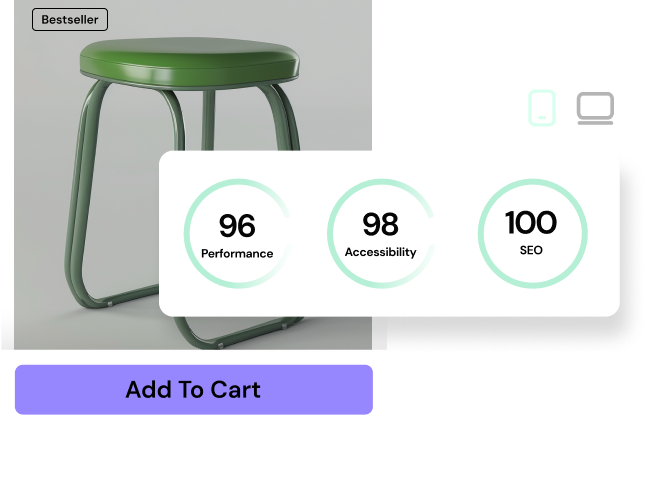
Google Core Web Vitals are a ranking factor. Your builder must generate lightweight code. It should support modern image formats (WebP, AVIF), handle caching intelligently, and allow full access to SEO metadata. If a platform blocks you from editing your robots.txt file or forces a specific URL structure, it limits your organic growth potential.
3. Extensibility and Integration
No website exists in a vacuum. You will need to connect email marketing tools, CRMs, analytics, and perhaps custom databases. The best builders have open APIs (Application Programming Interfaces) and a vast library of third-party plugins. This extensibility ensures that when your business needs a specific feature—like a complex booking system or a specific payment gateway—you can add it without waiting for the platform developers to build it.
4. Cost of Ownership and Scalability
We look at the Total Cost of Ownership (TCO). A $15/month plan might look cheap, but does it include transaction fees? Does the cost triple when you hit 10,000 visitors? Scalability is also technical. Will the site crash if you run a Super Bowl ad? The architecture you choose must handle traffic spikes and database growth without buckling.
Top Contenders in the No-Code Landscape
We will now examine the major players. We will present these objectively, focusing on their functional capabilities and target use cases.
Wix
Wix operates as a closed SaaS platform. It utilizes a drag-and-drop interface that is unstructured, meaning you can place elements anywhere on the canvas without adhering to a strict grid.
- Core Function: Visual website building with integrated hosting.
- Target Audience: DIY beginners and small business owners.
- Technical Context: Wix handles all maintenance, security, and updates. The ecosystem is closed, meaning you must use the Apps in their specific marketplace.
- Limitations: Once you choose a template, switching to a different one often requires rebuilding the site. Data portability is limited; you cannot export the site code to host it elsewhere.
Squarespace
Squarespace focuses on high-quality, pre-designed templates. It uses a structured editor, which keeps design elements aligned to a grid automatically.
- Core Function: Template-driven website creation.
- Target Audience: Creatives, photographers, and restaurants valuing aesthetics.
- Technical Context: It provides a managed environment. You get styling tools to adjust fonts and colors, but the layout logic is largely fixed to the template’s structure.
- Limitations: Deep customization requires custom CSS, which defeats the “no-code” purpose for some. eCommerce features are available but charge transaction fees on lower-tier plans.
Webflow
Webflow targets the designer persona. It is a visual interface for writing code. When you drop a “Div Block” in Webflow, you are visually editing the HTML and CSS classes directly.
- Core Function: Visual coding tool for designers.
- Target Audience: Professional designers and agencies who understand frontend logic.
- Technical Context: It generates clean code. You can export the HTML/CSS for a fee, but the CMS (Content Management System) functionality binds you to their hosting if you want to use it.
- Limitations: The learning curve is steep. It requires an understanding of the box model, flexbox, and CSS grid. It is not a “drag-and-drop” tool in the simplified sense.
Shopify
Shopify is a dedicated eCommerce platform. While it has a page builder, its primary engine is the backend commerce management (inventory, shipping, payments).
- Core Function: eCommerce store management.
- Target Audience: Pure retail businesses.
- Technical Context: It uses a template language called Liquid. Visual customization of the checkout process is restricted on standard plans to ensure security and stability.
- Limitations: Content management capabilities (like blogging) are basic compared to full CMS platforms. Extensive design changes often require coding in Liquid.
The Elementor Solution: A Strategic Platform Analysis
When we synthesize the criteria of ownership, design freedom, and performance, Elementor occupies a unique strategic position. It is not merely a “page builder” plugin; it has evolved into a comprehensive Website Builder Platform.
Elementor operates on a “best of both worlds” philosophy. It leverages the open-source power of WordPress—giving you 100% data ownership and access to 60,000+ plugins—while providing the cohesive, managed experience typically associated with SaaS tools.
The Core Engine: Visual Creation Meets Professional Code
At its heart, the Elementor Website Builder is a visual abstraction of professional web development. It allows users to build pixel-perfect designs using a live, frontend editor.
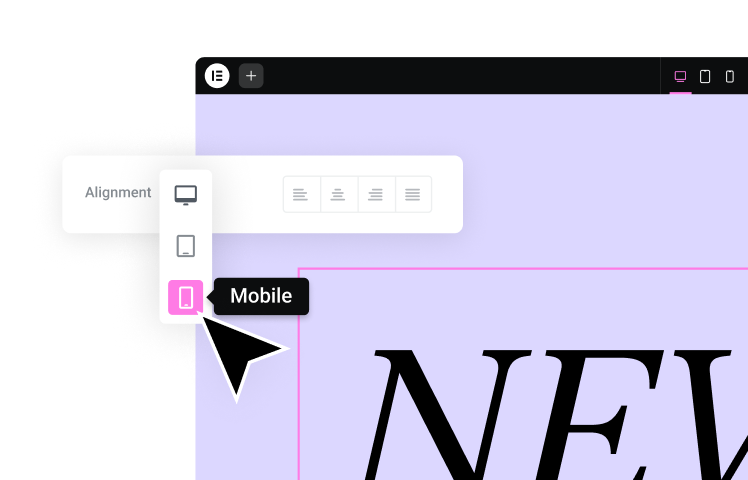
- Granular Design Control: Unlike rigid grid systems, Elementor provides controls for absolute positioning, Z-index layers, and Flexbox containers. You can manipulate the layout behavior for desktop, tablet, and mobile independently.
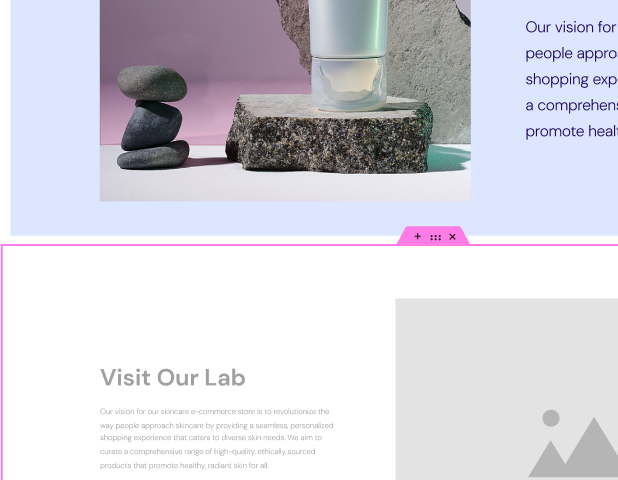
- Dynamic Content: This is a critical differentiator. Elementor allows you to design templates (headers, footers, single post layouts) that populate dynamically based on data. You design one “Product Page” template, and it automatically applies to thousands of inventory items.
- Global Design Systems: You can define global fonts, colors, and theme styles. This ensures brand consistency across the entire site and allows for rapid, site-wide design updates.
Relevant Link: Elementor Website Builder
The Hosting Equation: Managed Performance
Historically, the weakness of WordPress was hosting. Users had to manage their own servers, security keys, and caching plugins. Elementor Hosting resolves this by providing a managed infrastructure specifically tuned for the builder.
- Infrastructure: It runs on the Google Cloud Platform, utilizing C2 machines which are optimized for high-performance computing.
- Security: It includes enterprise-grade features like Cloudflare CDN, DDoS protection, and a Web Application Firewall (WAF).
- Unified Support: A major pain point in open source is the “blame game” between host and plugin developers. Elementor Hosting unifies this, providing a single point of support for both the software and the server.
Relevant Link: Elementor Hosting
The AI Workflow: From Strategy to Execution
Elementor has integrated Artificial Intelligence deeper than simple text generation. It treats AI as a workflow accelerator.
- AI Site Planner: This tool bridges the gap between idea and execution. You describe your business, and it generates a sitemap, wireframes, and a structural brief. It solves the “blank canvas” paralysis.
- Context-Aware Editing: Inside the editor, Elementor AI generates images, writes copy, and crucially, writes code. You can ask it to “write CSS to make this button pulse on hover,” and it generates the correct snippet and applies it.
- Angie (Agentic AI): This represents the future of no-code. Angie is an agentic AI that performs multi-step tasks. You can instruct it to “Create a landing page for the summer sale and link it to the email campaign,” and it executes the actions within the WordPress environment.
Relevant Video: How Elementor’s Ally Plugin Transforms Web Accessibility Relevant Link: Elementor AI Relevant Link: AI Site Planner
Completing the Ecosystem: Marketing and Optimization
A website is not just a brochure; it is a business engine. The Elementor ecosystem includes native tools that replace disparate third-party services.
- Image Optimizer: This plugin automatically compresses images and converts them to WebP or AVIF formats. This is essential for maintaining high Google PageSpeed scores without manual work.
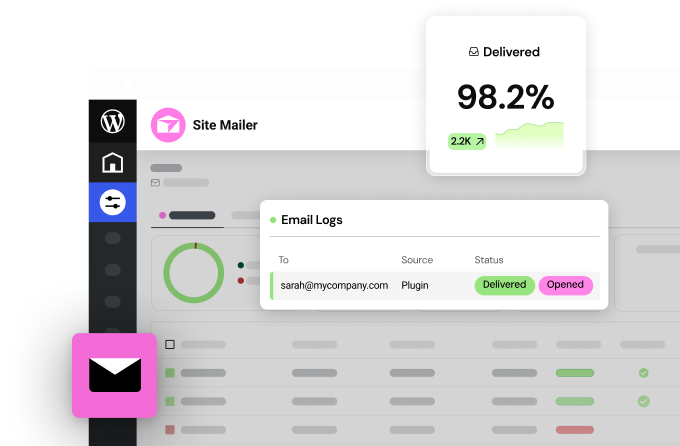
- Site Mailer: WordPress often struggles with delivering transactional emails (like password resets or form notifications). Site Mailer replaces the default PHP mail function with a reliable API, ensuring deliverability without complex SMTP setups.
- Send by Elementor: This is a native email marketing and automation tool. It allows you to collect leads via Elementor forms and trigger email sequences directly within the platform, unifying your marketing stack.
Relevant Link: Image Optimizer Relevant Link: Site Mailer Relevant Link: Send by Elementor
Specific Use Case Analysis
To help you decide, we must look at how these tools perform in specific professional scenarios.
For Freelancers and Agencies
If you build sites for clients, efficiency and scalability are your currency.
- The Workflow: You need a tool that supports templating. Elementor allows you to save “Kits”—entire website architectures—that you can deploy for new clients in minutes.
- Client Handoff: The Hello Theme provides a lightweight, blank canvas. You build the site, and then use the Role Manager to restrict what the client can access. They can edit text, but they cannot break the layout.
- Recurring Revenue: By utilizing managed hosting solutions, agencies can resell hosting to clients, ensuring a recurring revenue stream while maintaining control over the server environment.
Relevant Link: Elementor for Designers Relevant Link: Hello Theme
For eCommerce Merchants
Selling online requires trust and speed.
- WooCommerce Integration: WordPress is the most popular eCommerce platform via WooCommerce. Elementor’s WooCommerce Builder allows you to visually design your Single Product pages, Cart, and Checkout. You are not stuck with the default, generic shop layout.
- Hosting Requirements: eCommerce sites are database-heavy. They require robust caching that excludes the cart and checkout pages. Elementor Hosting comes pre-configured for these specific eCommerce requirements.
Relevant Link: WooCommerce Builder Relevant Link: eCommerce Hosting
For Small Business Owners (DIY)
You need speed and a low learning curve.
- Hello Biz Theme: For those who do not want to design from scratch, the Hello Biz theme offers a middle ground. It is a lightweight theme with a setup wizard that deploys a professional structure immediately.
- Library access: You have access to the Elementor Library, a repository of pre-designed blocks and pages. You can import a “About Us” section, change the text, and it is live.
Relevant Link: Elementor Library
The Role of Performance in Platform Selection
We cannot overstate the importance of performance. In 2025, a slow site is a broken site. Google’s Core Web Vitals measure three specific metrics:
- LCP (Largest Contentful Paint): How fast the main content loads.
- INP (Interaction to Next Paint): How quickly the site responds to a click.
- CLS (Cumulative Layout Shift): Visual stability.
Many SaaS builders struggle with CLS because they load heavy JavaScript files to render the page layout. Elementor has addressed this through a series of performance updates, including optimized asset loading and DOM output reduction. When paired with Image Optimizer, it ensures that the media assets—often the heaviest part of a site—are delivered efficiently.
Relevant Video: Elementor Performance Optimization
Accessibility and Legal Compliance
Web accessibility is no longer optional. Legislation like the ADA (Americans with Disabilities Act) and the EAA (European Accessibility Act) mandates that digital experiences be accessible to all users. Most builders leave this up to you. However, the Ally by Elementor plugin integrates accessibility scanning directly into the workflow. It checks for contrast ratios, missing alt tags, and navigation structure, providing a remediation checklist. This proactive approach reduces legal risk and opens your site to a wider audience.
Relevant Link: Ally Web Accessibility
Future Trends: The Agentic Web
As we look toward the future of web creation, the trend is moving away from static pages and toward dynamic, agentic interactions. We will see a shift where the “builder” becomes a “director.” Instead of manually dragging a button 10 pixels to the right, you will instruct the AI to “optimize the layout for mobile conversion.” The underlying system—like Angie—will interpret that intent, analyze thousands of data points, and adjust the layout accordingly. This does not replace the creator; it elevates them. It removes the mundane tasks of pixel-pushing and allows the human expert to focus on strategy, brand narrative, and user psychology.
Making the Final Decision
Choosing a no-code builder is a commitment to a specific technical philosophy. If you choose a closed SaaS provider, you are prioritizing convenience today over control tomorrow. It is a valid choice for a temporary project or a business with very simple needs. If you choose a platform like Elementor, you are choosing an ecosystem. You are betting on the stability of open source, the power of a global community, and the flexibility to pivot your digital strategy without having to rebuild your foundation.
The “best” builder is the one that removes the ceiling on your growth. It is the tool that disappears into the background, allowing your creativity and business logic to take center stage. For millions of professionals, that balance is found in the intersection of WordPress and Elementor.
10 Frequently Asked Questions (FAQs)
What is the difference between a page builder and a website builder? A page builder typically functions within an existing CMS to layout the content of a single URL. A website builder controls the entire global architecture of the site, including headers, footers, 404 error pages, and archive templates. Modern platforms like Elementor have transitioned from page builders to comprehensive website builders that manage the entire site’s design system.
Does using a no-code builder negatively impact SEO? Not inherently. The impact on SEO depends on the code quality the builder generates. Poorly coded builders generate excessive HTML bloat (DOM depth), which can confuse search crawlers and slow down load times. High-quality builders generate semantic HTML and offer full control over SEO metadata (title tags, meta descriptions, schema markup), allowing them to rank just as well as hand-coded sites.
Can I move my website from a SaaS platform to WordPress later? It is difficult. Platforms like Wix and Squarespace do not offer a native way to export your website’s code or database in a format that can be imported into WordPress. Migration usually involves manually copying and pasting content or using complex scraping tools to rebuild the site structure on the new platform.
Why is open source considered better for ownership? Open-source software (like WordPress) allows you to download the core software and run it on any server you choose. You own the files and the database. If your hosting provider shuts down or increases prices, you can pick up your entire digital asset and move it to a different provider. With closed source, your data exists only on their servers.
Do I need managed hosting for a no-code site? While you can host WordPress on any server, managed hosting provides specific server-side configurations that optimize performance for the specific builder you are using. This includes server-level caching, PHP worker tuning, and security rules that prevent common exploits, removing the technical burden of server management from the user.
How does AI integration help in web building? AI assists in three phases: planning, creation, and optimization. In the planning phase, it can generate sitemaps and wireframes. During creation, it generates text and images and can write custom CSS or HTML snippets. In optimization, AI agents can analyze site accessibility and performance to suggest or implement improvements automatically.
Is it possible to build an enterprise-level site with no-code? Yes. “Enterprise” refers to scale, security, and traffic handling. A no-code visual builder is simply the interface for creating the frontend. If the underlying hosting infrastructure is robust (elastic scaling, CDNs, enterprise-grade firewalls), the visual interface does not prevent the site from serving millions of visitors securely.
What is the learning curve for Elementor compared to Wix? Wix has a flatter learning curve initially because it restricts your options. Elementor has a slightly steeper curve because it exposes professional web design concepts (margins, padding, Z-index, flexbox). However, this investment in learning yields significantly higher creative freedom and professional capability in the long run.
Can I create custom dynamic post types without code? Yes. Advanced builders allow you to visually map dynamic data. You can use plugins to create custom post types (like “Portfolio” or “Real Estate Listings”) and custom fields. The builder then allows you to design a single template that pulls data from those fields dynamically, creating complex, database-driven sites without writing PHP.
What happens if I stop paying for a website builder subscription? On a closed SaaS platform, your website is taken offline and eventually deleted. On an open-source platform like WordPress with a plugin like Elementor, your site remains live because you host it. If you stop paying for the builder’s pro license, you generally lose access to premium support and updates, but the existing site continues to function.
Looking for fresh content?
By entering your email, you agree to receive Elementor emails, including marketing emails,
and agree to our Terms & Conditions and Privacy Policy.